
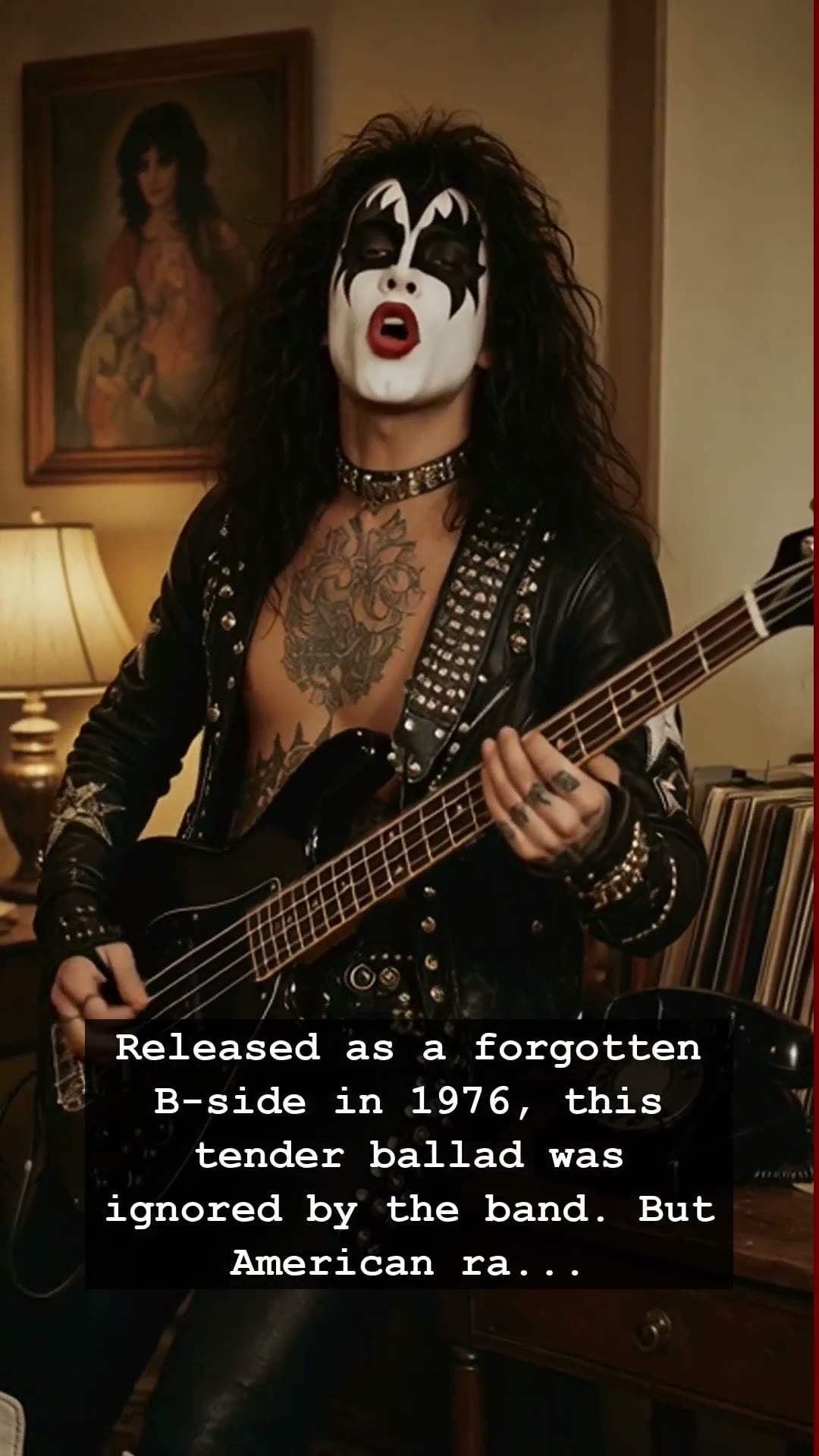
In the mid-seventies, the music landscape was a volatile mix of grit and spectacle. Amidst the rise of arena rock and the shimmering neon promise of Studio 54, four men in greasepaint and platforms were busy redefining excess. KISS was the undisputed king of the stage, synonymous with pyrotechnics, blood-spitting antics, and high-octane rock anthems that shook the foundations of every stadium they graced. But beneath the layers of Kabuki makeup and leather, a quieter, more vulnerable melody was brewing—a track that the band itself nearly threw into the abyss of history as a discarded B-side.
That song was Beth, a tender, piano-driven ballad that felt completely at odds with the band’s bombastic identity. When it was released in 1976 as the B-side to Detroit Rock City, the members of KISS were dismissive. They viewed it as a soft departure, a curiosity that barely registered on their internal radar. To them, it was just filler, a minor footnote on the Destroyer album that wouldn’t stand a chance against their louder, guitar-heavy staples. The record executives were equally unconvinced, burying the track on the flip side of the vinyl, assuming it would be forgotten as quickly as it had been recorded.
Then, something inexplicable happened. As the song drifted over the airwaves, switchboards across America suddenly began to melt down. Listeners were not just calling in; they were relentless, flooding radio stations with passionate requests for the ballad that had touched a nerve they didn’t know KISS could reach. The public, tired of the usual hard-rock bravado, gravitated toward the raw, melancholic honesty of Peter Criss singing about the loneliness of life on the road. It was an authentic, human moment that pierced through the synthetic armor of the disco era.
The groundswell of support was so overwhelming that record label executives had no choice but to scramble. They desperately flipped the single, promoting Beth to the A-side in a frantic attempt to keep up with the public demand. It was a rare instance where the audience dictated the trajectory of a rock band, forcing these icons of excess to embrace a softer side of their artistry. This accidental hit became the highest-charting song of their career, proving that even a band known for world-class theatrics could find its greatest success in a moment of genuine, stripped-back vulnerability.
Decades later, the legend of Beth still resonates as a testament to the unpredictable power of music. It remains a staple of classic rock radio, a reminder of a time when the needle dropping on a spinning vinyl record could start a nationwide cultural obsession. It is a song that humanized the gods of rock, bridging the gap between the stadium floor and the listener’s living room. Whether you remember hearing it on a crackling jukebox or for the first time on a cassette tape, Beth stands as an eternal symbol of the magic found in the most unexpected places. Does this song still take you back to those golden days?