
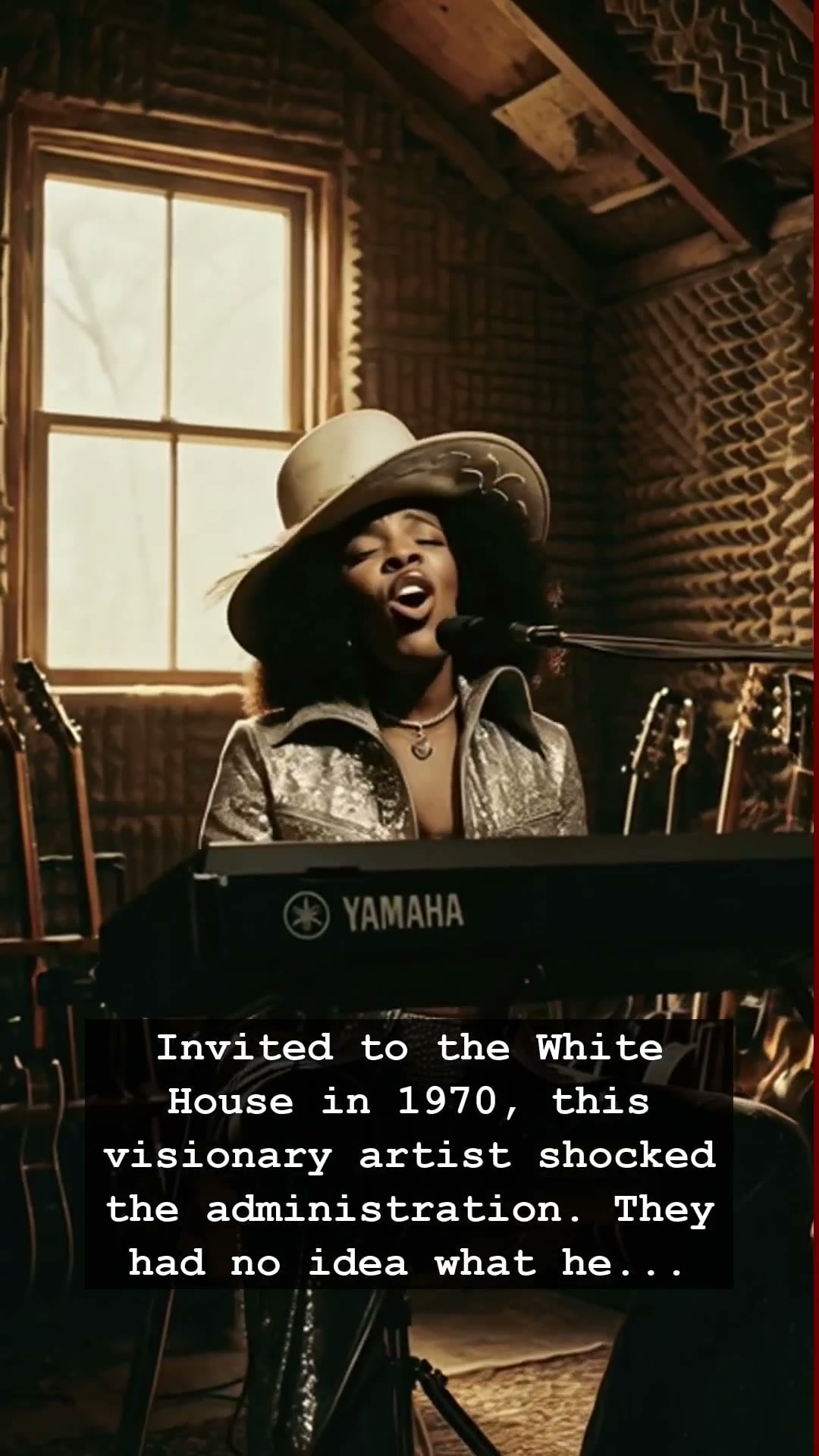
It was the golden era of soul, a time when the world seemed to vibrate with the friction of changing tides. In 1970, the air in America was heavy with the polarization of the Vietnam War and the shifting dreams of the counterculture. Amidst this backdrop, Sly and the Family Stone had become more than just a band; they were a movement. With their technicolor outfits, multi-racial lineup, and an infectious funk groove that defied categorization, they were the sound of a new, unified American identity. So when the invitation arrived from the White House, it felt like an opportunity to bridge the divide between the mahogany desks of power and the dusty, rhythmic streets of the urban landscape.
But the administration had vastly underestimated the spirit of Sly Stone. They saw a popular act that could provide a veneer of relatability, a way to pacify the restless youth who were trading their radios for protest signs. They wanted the soul, but they did not want the truth that came with it. Sly and the Family Stone arrived at 1600 Pennsylvania Avenue not as political puppets, but as architects of a sonic revolution. The atmosphere was stifling, thick with the weight of formality that stood in stark contrast to the fluid, sweat-soaked energy of a concert stage at Woodstock or a bustling local club.
The shock did not come in the form of a riot or a fiery speech, but through a calculated display of non-conformity. Sly Stone, with his wild mane and defiant aura, maneuvered through the halls of power like a man who knew exactly how fragile the illusion of authority was. He treated the decorum of the White House with the same irreverent energy he poured into his music, turning the invitation into an uncomfortable mirror held up to the establishment. It was a subtle, stinging reminder that his counterculture anthem was not for sale, and that the funk was far more dangerous to the status quo than any picket line.
Decades later, the legend of that visit remains a potent symbol of artistic integrity. While the band would eventually descend into the dark, chaotic labyrinth of substance abuse and inner-group fracture, the image of Sly Stone standing his ground remains frozen in our collective memory. It was the moment the funk infiltrated the highest office in the land, proving that true art refuses to be domesticated. It echoes the same tension we felt while listening to the radio, adjusting the dial to find something real, something that spoke to the soul of a country caught between its past and its uncertain future.
Today, we look back at Sly and the Family Stone with a mixture of awe and melancholy. They represent a lost era where music was a seismic force capable of shaking the very foundations of the political establishment. As you spin those old records, listen closely to the rhythm. It is more than just a beat; it is a piece of history that refused to bow. Do you remember the first time their sound changed your perspective, or does the legacy of that White House defiance still echo in the songs you play today?