
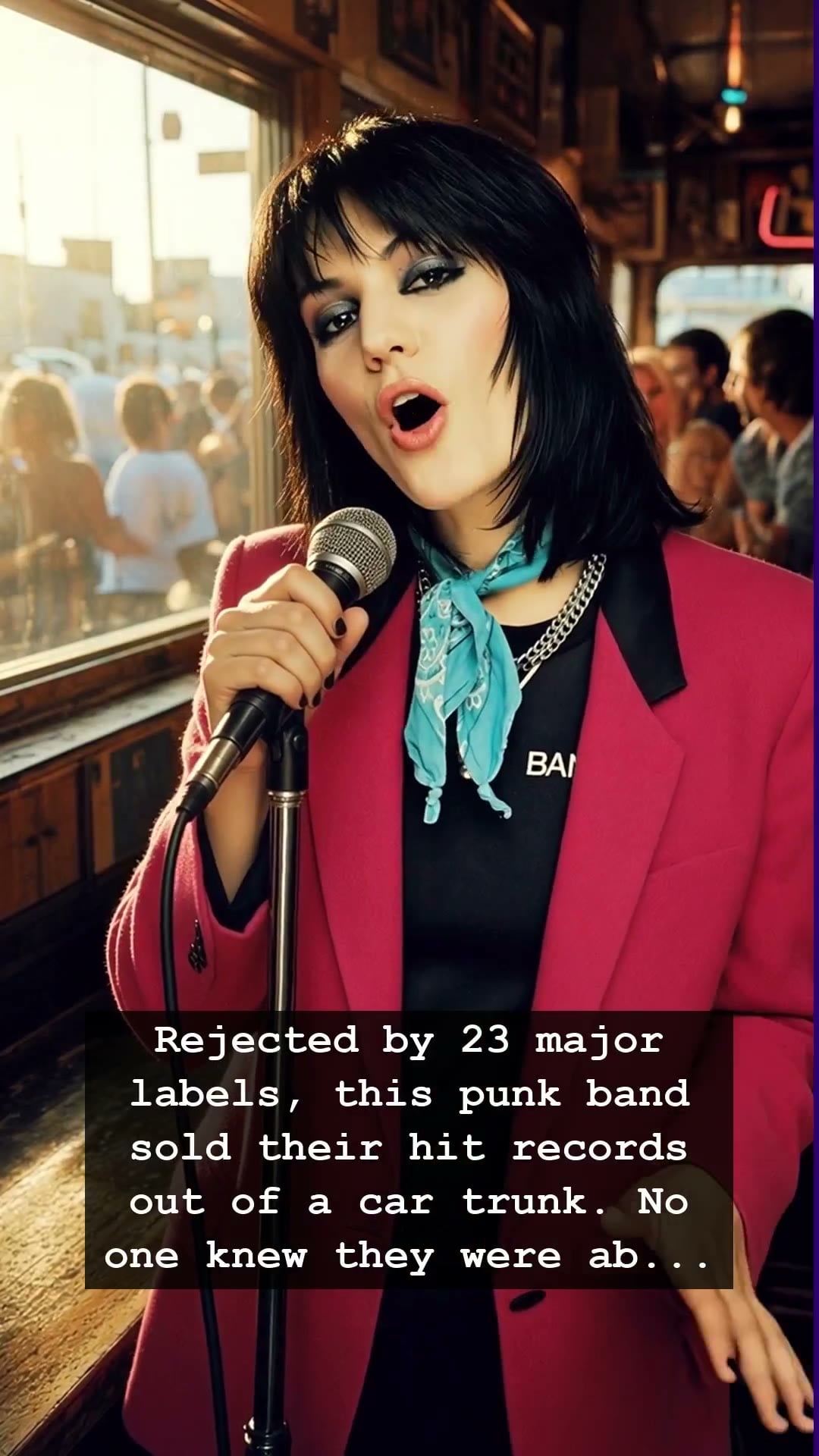
In the cutthroat music industry of 1981, twenty-three doors slammed shut in the face of Joan Jett. To the major label executives of the era, the sound of Joan Jett and the Blackhearts was an unmarketable anomaly—too raw for pop, too aggressive for the airwaves, and led by a woman in an industry that preferred their female rockers as ornaments rather than architects of sound. Most artists would have retreated into the shadows of obscurity, but Jett was forged in the fire of the punk explosion. Refusing to let the industry dictate her destiny, she took matters into her own hands with a gritty determination that would eventually redefine rock and roll history.
Picture the scene: a beat-up Cadillac parked on a grimy Los Angeles street corner, its trunk popped open to reveal a treasure trove of vinyl records. This was the makeshift distribution hub for what would become one of the most iconic anthems in history. Without a label, a fancy marketing budget, or the backing of the corporate suits who had dismissed her, Joan Jett and the Blackhearts peddled their own records directly to the fans. They bypassed the gatekeepers, turning the trunk of a car into the most honest record store in America. It was a DIY movement in its purest form, pre-dating the internet age’s democratization of music by decades.
At the time, the airwaves were dominated by the polished synthesizers of the new wave movement and the lingering echoes of disco fading from the dance floors of Studio 54. Yet, in the back of that Cadillac, something primitive and electric was stirring. When the world finally heard the relentless, punchy chords of I Love Rock ‘n’ Roll, the cultural landscape shifted instantly. It was the sound of defiance, a sonic middle finger to the industry that said she didn’t belong. The song exploded not because of a corporate push, but because the raw, unfiltered energy of Joan Jett resonated with a generation tired of being told what to listen to.
This story is more than just a footnote in music history; it is a testament to the iron will of Joan Jett and the Blackhearts. They proved that authenticity is the ultimate currency. While peers were obsessed with the visual theatrics of MTV, Jett focused on the visceral power of three chords and the truth. Her journey from the back of a car to the top of the charts serves as a timeless reminder that the most powerful music often comes from the fringes, fueled by artists who refuse to compromise their vision.
Today, the legacy of that struggle remains as potent as ever. Whether you were rocking out with a Walkman in the early eighties or you are discovering her grit for the first time, the story of Joan Jett and the Blackhearts continues to inspire. It reminds us that when the world tells you no, the only path forward is to build your own stage. So, turn up the volume, let the distortion cut through the noise, and remember that real rock and roll can never be silenced.