
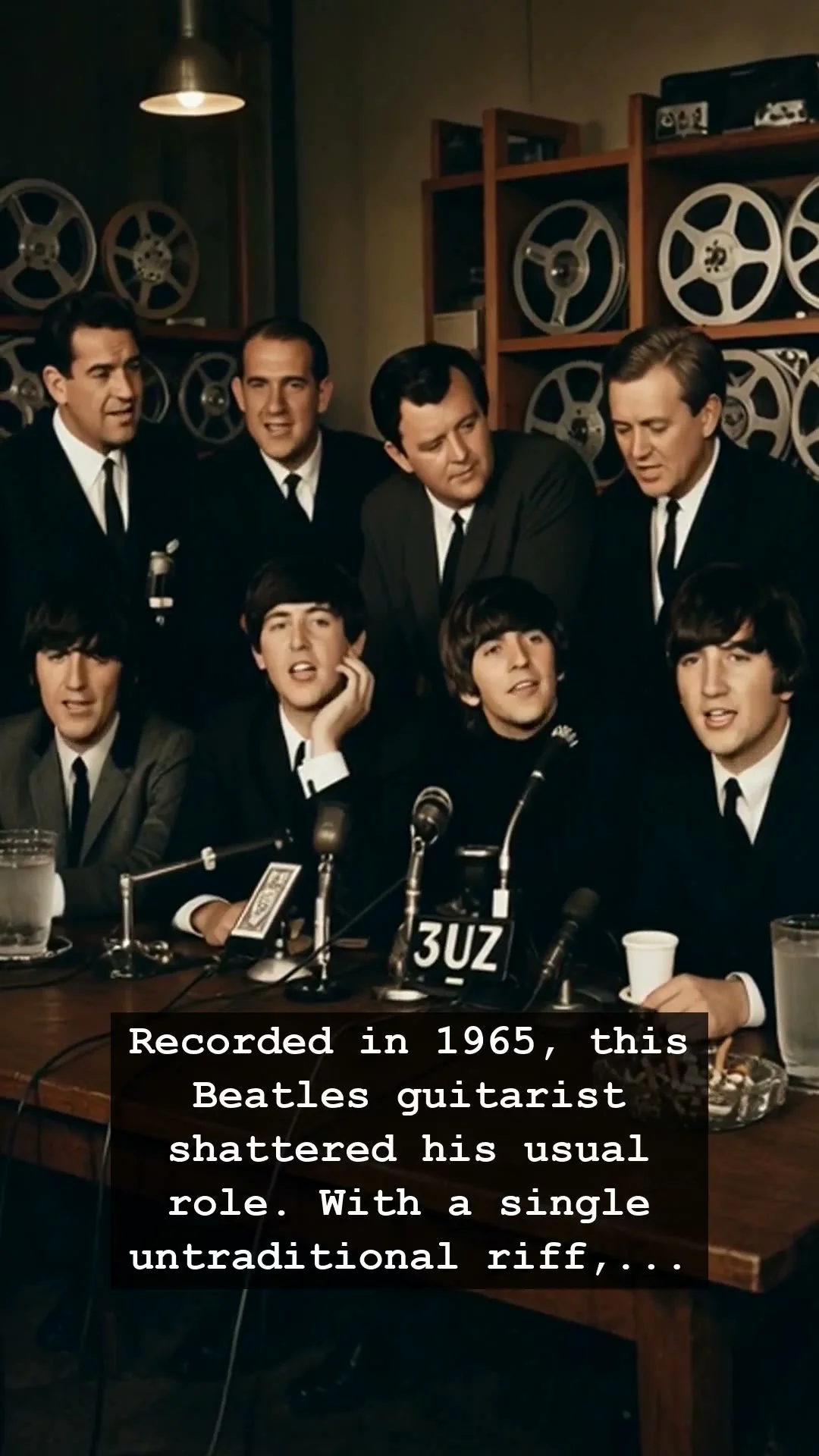
It was 1965, a year where the air in London felt electric with the promise of a changing world. Inside the hallowed halls of Abbey Road Studios, the four lads from Liverpool were not just recording a pop song; they were architects of a new sonic reality. While the world focused on the charismatic banter of John and Paul, a quiet, contemplative figure stood in the shadows. George Harrison, often relegated to the role of the steady rhythm player, was about to shatter his own boundaries. With a single, unorthodox riff, he didn’t just add a melody to a track; he completely rewrote the melancholic drive of Norwegian Wood, forever altering the trajectory of The Beatles.
At the time, the music industry was obsessed with the infectious, upbeat pulse of the British Invasion. Jukeboxes across America were spinning records that demanded listeners to twist and shout, yet George Harrison felt the limitations of these three-chord structures. He had been listening to the intricate, hypnotic drones of Indian classical music, a sound that felt alien to the pop landscape of the mid-sixties. When he picked up his sitar, a gift that would soon become synonymous with his musical evolution, he wasn’t looking for a catchy hook. He was searching for a texture—a haunting, buzzing resonance that could anchor a song in raw, unfiltered human longing.
The tension in the studio was palpable. John Lennon had penned a story of a clandestine affair, a tale of bitterness and isolation that required a soundscape beyond standard guitars. As the tape rolled, Harrison experimented, weaving the sitar into the tapestry of the song. It was a risky, almost rebellious move that deviated from the polished, radio-friendly aesthetics that MTV’s predecessors were desperate to package. This was the birth of the psychedelic influence that would soon dominate the latter half of the decade, a moment where a simple, mournful riff acted as the bridge between rock and the avant-garde.
Looking back, it is impossible to divorce the brilliance of The Beatles from these moments of quiet defiance. This was an era before digital editing, where every note committed to magnetic tape was a physical manifestation of an artist’s soul. The genius of Harrison wasn’t just in his technical ability, but in his refusal to stay in the corner designated for him by the press. He understood that to lead a revolution, one must be willing to sound different, even if that meant alienating the casual listeners of the time.
Today, that iconic riff remains a touchstone for anyone who believes that music should be more than just background noise. It serves as a reminder that the most profound changes in history often come from the quietest corners of the room. When you listen to those notes now, decades later, you aren’t just hearing a song from 1965; you are hearing the sound of a musician breaking free from his chains. We owe much of our modern musical landscape to those experimental afternoons in London. Do you still remember where you were the first time that haunting sound caught your ear?