
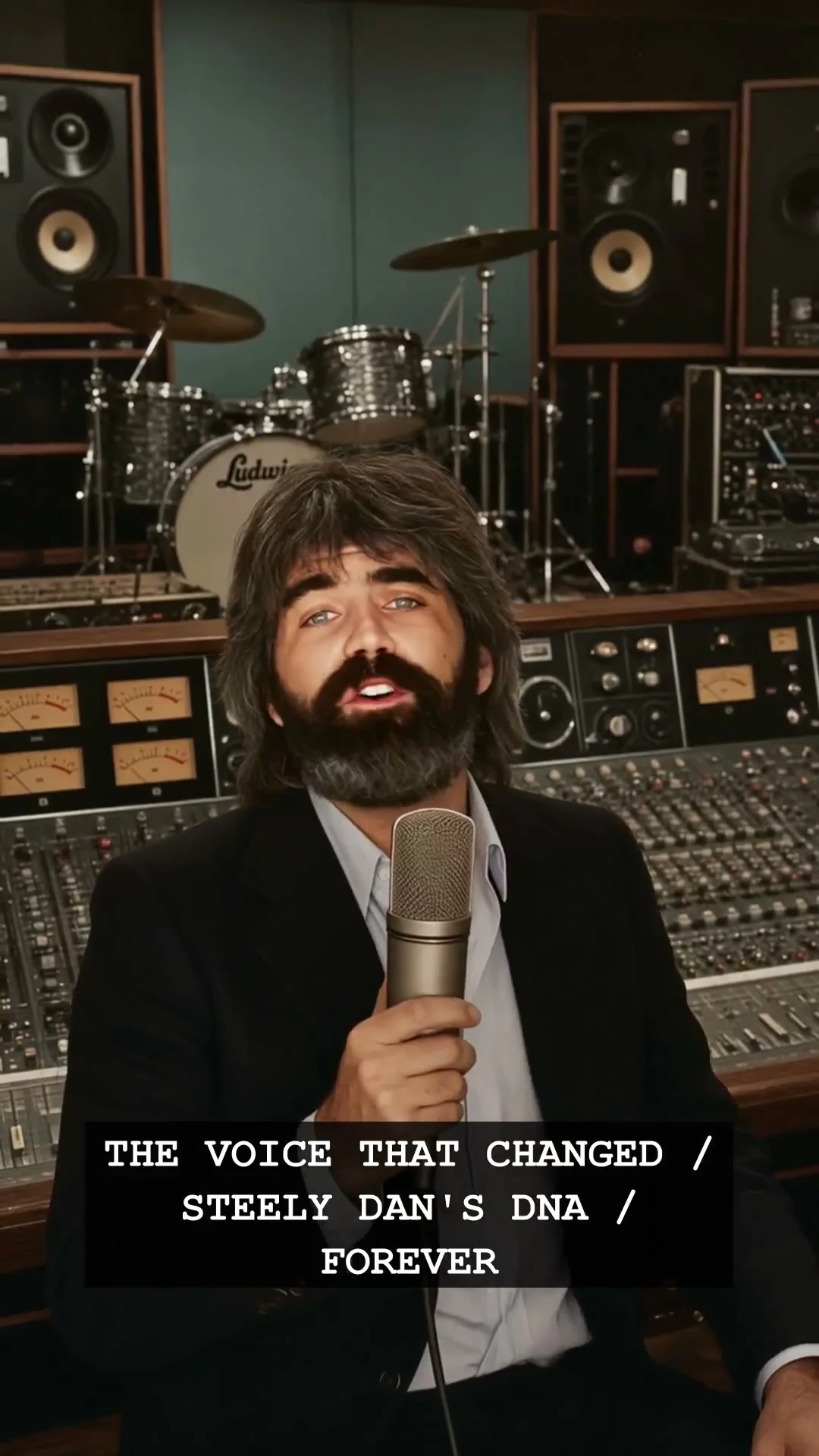
In the smoke-filled, high-fidelity recording studios of the 1970s, perfection was the only standard. Donald Fagen and Walter Becker, the eccentric architects behind Steely Dan, were notorious for their relentless pursuit of sonic purity. They were perfectionists who would cycle through dozens of session musicians to capture a single perfect note. Yet, amidst this rigorous atmosphere of jazz-rock precision, a seismic shift occurred. It arrived in the form of a man with a voice like velvet and a soul deeply rooted in the bluesy heart of the American sound. When Michael McDonald stepped up to the microphone, he didn’t just add a layer of harmony; he fundamentally altered the band’s DNA forever.
Before Michael McDonald became a household name with The Doobie Brothers, he was a hungry, talented session player navigating the complex landscape of Los Angeles music. His arrival into the Steely Dan fold was less of a calculated audition and more of a spontaneous combustion of talent. Fagen and Becker were known for their biting sarcasm and emotional detachment, but McDonald brought a warmth—a grounded, soulful human element—that the band’s clinical compositions often lacked. On tracks like Peg and Kid Charlemagne, his voice provided the lush, gospel-infused texture that transformed complex jazz chords into accessible, radio-ready masterpieces.
To understand the magnitude of this change, one must revisit the era of the late seventies, a time when the Jukebox was still the king of every neighborhood diner and the FM radio dial was the pulse of the nation. It was a period defined by the transition from the raw, rebellious energy of early rock toward the polished, expensive production of the AOR era. Steely Dan sat at the pinnacle of this movement, and Michael McDonald was their secret weapon. His backup vocals weren’t just supporting tracks; they were the hidden heartbeat, providing a soulful counterpoint to the cynical, polished lyricism that defined the band’s identity.
There is a specific, haunting quality to the way Michael McDonald layered his harmonies. It is a sound that defines an entire generation of listeners, a sonic nostalgia that pulls you back to the days of long drives with the windows down and the static of a Walkman playing in the background. His influence was so profound that even after he moved on to front The Doobie Brothers, his signature sound—often referred to as ‘blue-eyed soul’—remained a permanent fixture in the Steely Dan sonic palette. It was a moment of artistic synergy where the cool, intellectual distance of rock met the visceral, undeniable heat of soul.
Today, we look back at those recordings not just as songs, but as artifacts of a bygone golden age. The partnership between the band’s founding duo and Michael McDonald serves as a testament to the power of collaboration. It reminds us that even in the most guarded creative spaces, magic can happen when the right voice finds the right melody. Does his voice still echo in your memories? It remains one of the most recognizable, transformative forces in the history of American rock, still resonating with every chord played today.