
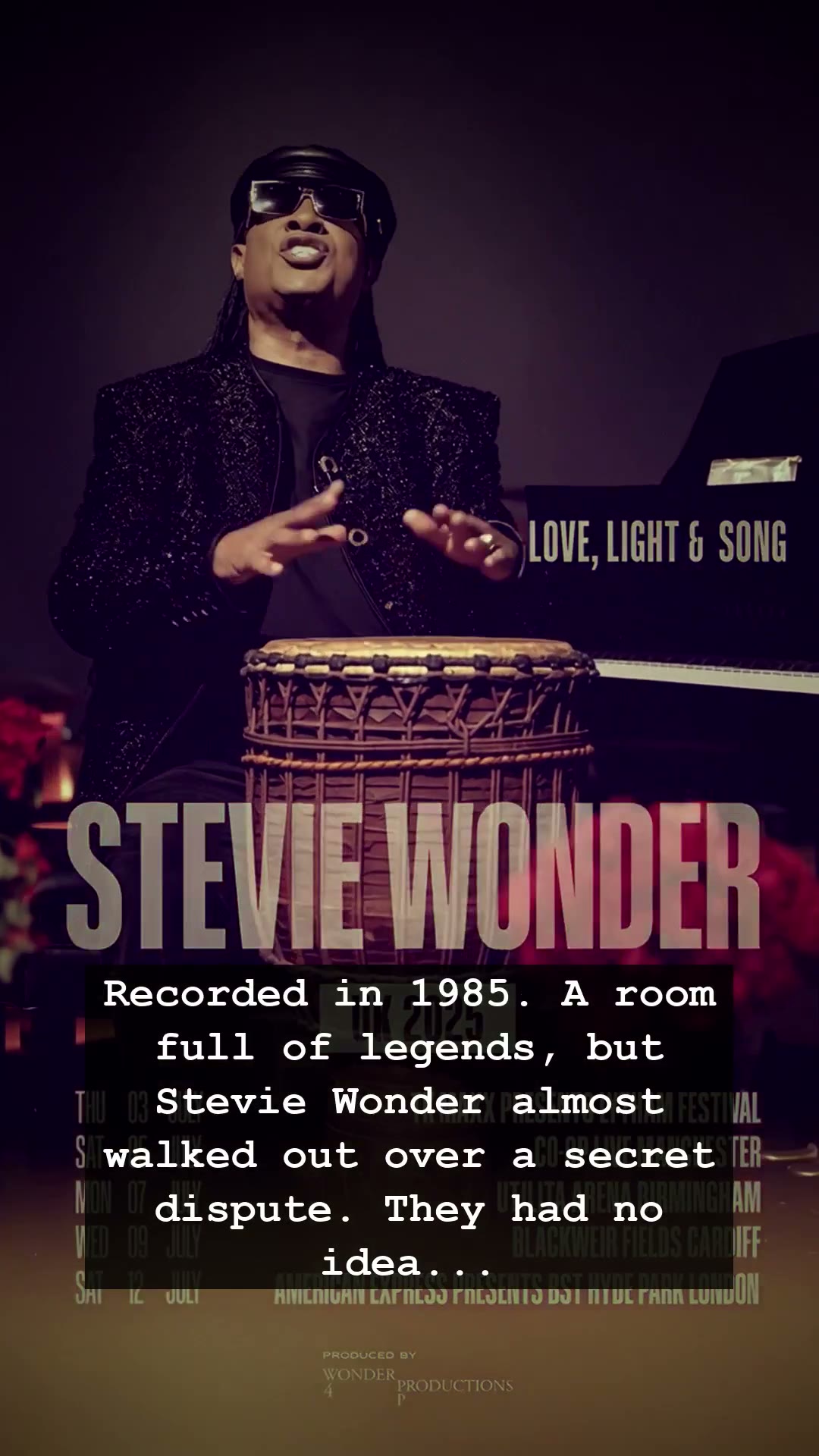
It was 1985, a year defined by the neon pulse of MTV and the global dominance of pop culture. Deep inside A&M Studios in Los Angeles, the air was thick with cigarette smoke and the palpable ego of the greatest musical minds on the planet. This was the night USA for Africa gathered to record the legendary anthem We Are The World. Yet, amidst the sea of iconic faces and high-wattage talent, one man felt deeply unsettled. Stevie Wonder, the soulful genius whose melodies had shaped decades of American music, stood on the brink of walking out the door. The project that was meant to unite the world almost collapsed before the first chorus was even captured.
The tension stemmed from a creative clash that went beyond mere artistic preference. Stevie Wonder was pushing for a lyric in Swahili to ensure the message of the song resonated on a global, inclusive scale. However, some of his peers felt the addition was unnecessary, leading to a heated, behind-the-scenes confrontation. As the night stretched into the early morning hours, the exhaustion of the session began to fray nerves. For a moment, the room full of legends—including Bruce Springsteen, Cyndi Lauper, and Bob Dylan—looked on in silence as one of the most prolific songwriters of the 20th century threatened to leave the project entirely. It was a stark reminder that even in the pursuit of humanitarian unity, the artistic process is rarely without its jagged edges.
Looking back at the eighties, it is easy to view that night through a lens of polished nostalgia, forgetting the grit and the human friction required to create such a massive cultural landmark. Stevie Wonder was not just an artist; he was a standard-bearer for creative integrity. His insistence on authenticity reflects the very essence of the era, a time when music was transitioning from the organic roots of the seventies into the high-production demands of the mid-eighties. The studio that night felt like a pressure cooker, mirroring the immense weight of expectation that defined the decade.
Stevie Wonder eventually chose to stay, and the world was gifted a song that became an inseparable part of the global cultural fabric. The tension that almost derailed the session serves as a fascinating footnote in the history of pop, proving that even the most monumental achievements are born from fragile, often tumultuous, human interactions. The drama of that night at the studio reminds us that icons are not immune to the same insecurities and conflicts that test us all.
Today, when we hear the opening notes of that anthem, it is impossible not to think of that quiet drama that played out behind the scenes. It adds a layer of raw, human complexity to a track often labeled as merely aspirational. Stevie Wonder left an indelible mark on that recording, not just with his voice, but with the persistence of his creative vision. It remains a poignant reminder that even in a room full of stars, the most profound moments are often found in the struggles to find common ground. Next time you listen, try to hear the history behind the harmony.