
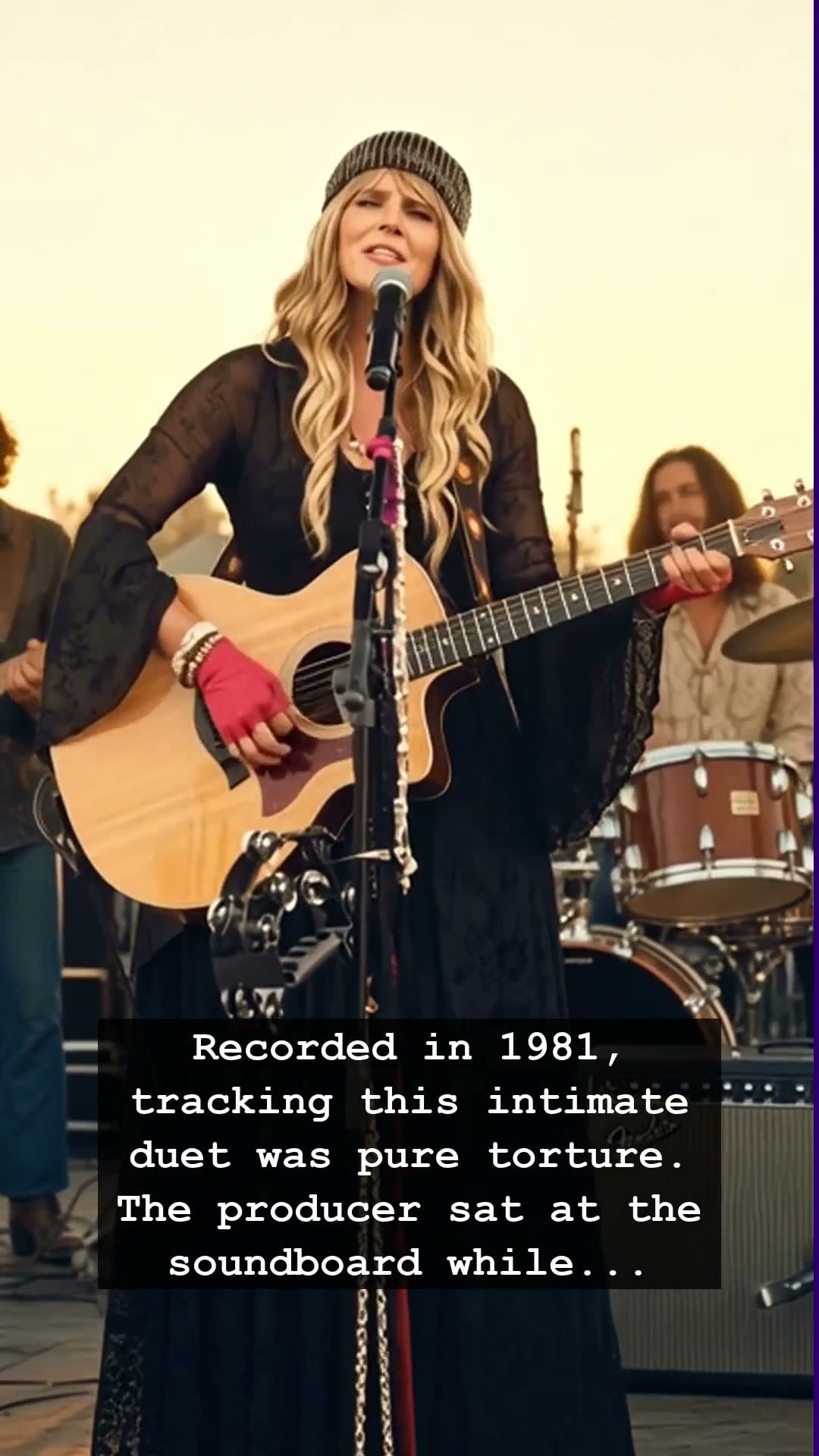
The year was 1981, a time when the glow of the neon lights at Studio 54 was beginning to dim, and the digital revolution of the Walkman was just starting to redefine how we consumed our heartbreak. Amidst this cultural shift, a studio session was taking place that would go down in history as one of the most agonizingly beautiful moments in music. Stevie Nicks and Don Henley, two titans of the California sound, stepped into the booth to record Leather and Lace. While the song became a radio staple, the air in that room was thick with the weight of unspoken tension and the lingering echoes of a romance that had long since shattered.
To understand the gravity of that session, one must look at the tangled web of the era. The producer sitting at the soundboard was Jimmy Iovine, who was romantically involved with Stevie Nicks at the time. Yet, the woman he loved was pouring her soul into a duet with her former flame, Don Henley. The dynamic created a pressure cooker of professional duty and personal jealousy. It was a classic Hollywood drama playing out in real-time, hidden behind the acoustic foam and the blinking lights of the recording console. Every breath and every harmony captured on the track was not just a performance; it was raw, unfiltered, and deeply painful evidence of lives intertwined.
Stevie Nicks brought a vulnerability to the song that only someone living through a fractured reality could convey. Her raspy, ethereal voice perfectly complemented the gritty sincerity of Don Henley, creating a masterpiece that felt like a diary entry meant only for the eyes of the jilted. It is this authentic, lived-in sorrow that keeps fans coming back decades later. Unlike the overly polished production that would define the mid-eighties, this track remains a testament to the power of human fragility. It reminds us that behind every chart-topping hit, there is often a human being struggling to keep their composure while their heart is being laid bare for the world to hear.
The song serves as a time capsule for an era defined by excess and emotional turbulence. It captures the specific, bittersweet feeling of moving on while the ghost of a past lover still lingers in the harmony. Even now, listening to the interplay between the two voices, you can feel the hesitation and the resignation that permeated that 1981 studio session. It is a haunting reminder that music is the only medium capable of freezing a broken heart in place, preserving it for eternity while the rest of the world moves on.
As we look back at the giants of that generation, we realize that the magic of the music wasn’t just in the songwriting or the melody; it was in the friction. The legend of Stevie Nicks and Don Henley persists not just because of their talent, but because we recognize our own scars in their delivery. Next time you hear the familiar opening chords of Leather and Lace, try to listen past the melody and hear the silence between the lines. Do you remember where you were when you first heard this story of love, loss, and the music that survived it all?