
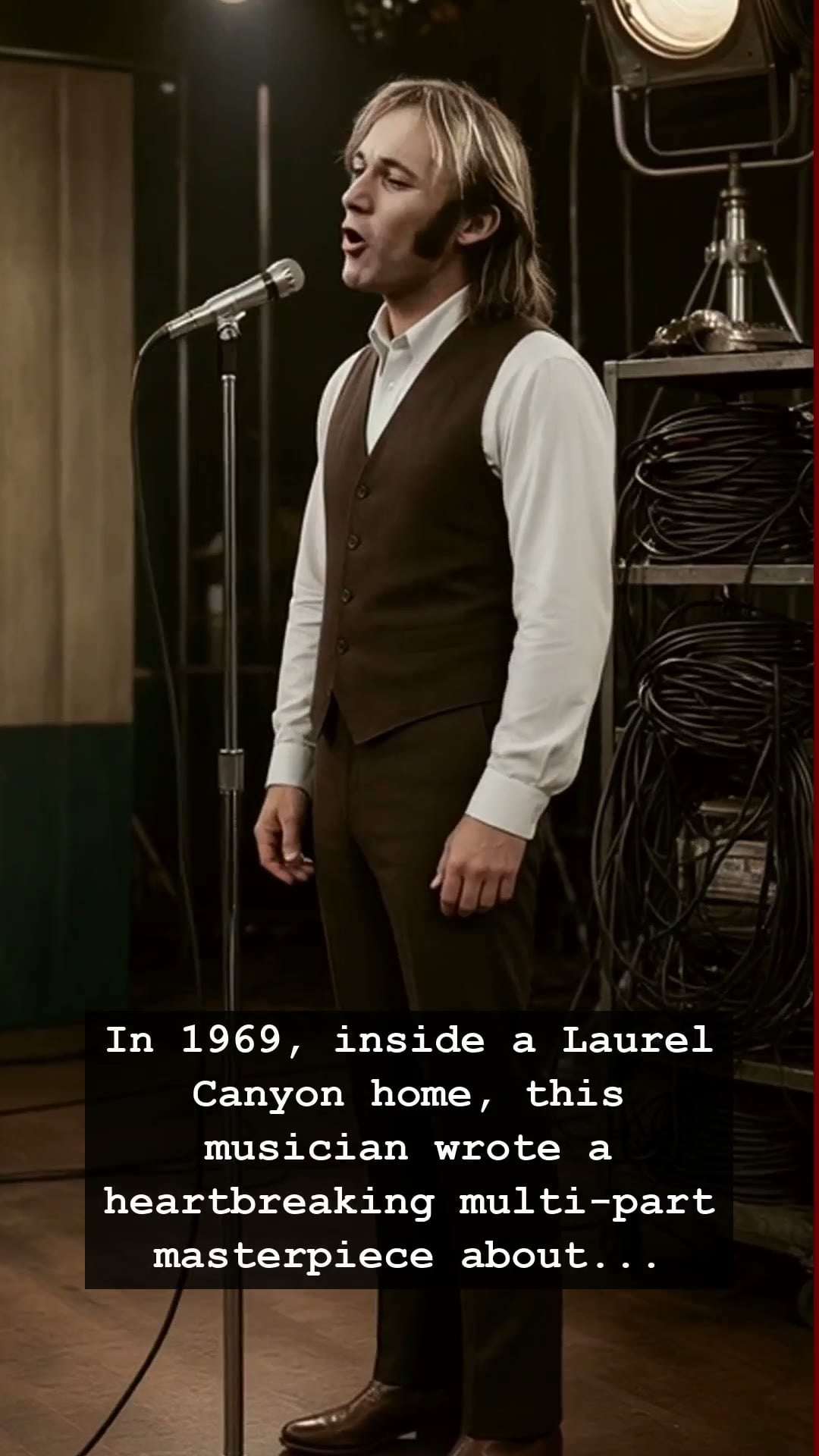
It was 1969, and the air in Laurel Canyon was thick with the scent of jasmine and the restless energy of a changing decade. Inside a quiet home tucked away from the encroaching chaos of the city, Stephen Stills sat alone with nothing but an acoustic guitar and a heart that was splintering into a thousand pieces. He wasn’t just writing a song; he was performing an autopsy on his own collapsing relationship with folk icon Judy Collins. The result was not a simple pop melody, but a towering, multi-part masterpiece that would define an era of introspective rock: Suite: Judy Blue Eyes.
To understand the gravity of this moment, one must step into the psyche of Stephen Stills at the height of the late sixties. The peace and love movement was beginning to fray at the edges, and the music industry was hungry for something more raw and honest than the polished radio hits of the early decade. As a key architect of the folk-rock sound, Stephen Stills possessed an uncanny ability to translate personal torment into complex, layered harmonies. While the rest of the world was turning its gaze toward the massive festival stage at Woodstock, Stills was locked in a private chamber of agony, distilling the final gasps of a romance into a composition so intricate that it felt less like a song and more like a confession.
The genius of the piece lay in its construction. Stephen Stills didn’t just sing about his sadness; he orchestrated it. The track moves through distinct movements, mirroring the chaotic progression of a breakup: the initial denial, the desperate pleas, the cold realization, and the eventual, haunting resignation. It is a sonic document of a man trying to convince himself that he could survive the end of his world. By the time the track reaches its climactic Spanish-influenced coda, the listener is not just hearing music—they are bearing witness to a man standing on the precipice of his own future, looking back at a woman who defined his past.
The legacy of this song goes beyond the charts; it remains a touchstone for anyone who has ever had to say goodbye while still deeply in love. In an era before the digital permanence of the internet, when music was carried on vinyl and listened to via heavy turntables, Stephen Stills captured a transient, human feeling and froze it in time. His voice, strained with the authentic weight of regret, serves as a bridge to a bygone era of Laurel Canyon songwriting, where the focus was on the craftsmanship of the soul rather than the flash of a music video.
Today, decades later, when those opening chords ring out, they still carry the weight of that 1969 afternoon. It reminds us that behind every legendary rock anthem, there is often a hidden, lonely truth—a moment of vulnerability that the artist was brave enough to set to music. Stephen Stills may have moved on, but the masterpiece he etched in that canyon home continues to echo through the halls of rock history, proving that even the most painful goodbyes can result in something truly eternal. Do you remember where you were the first time those harmonies pulled at your heartstrings?