
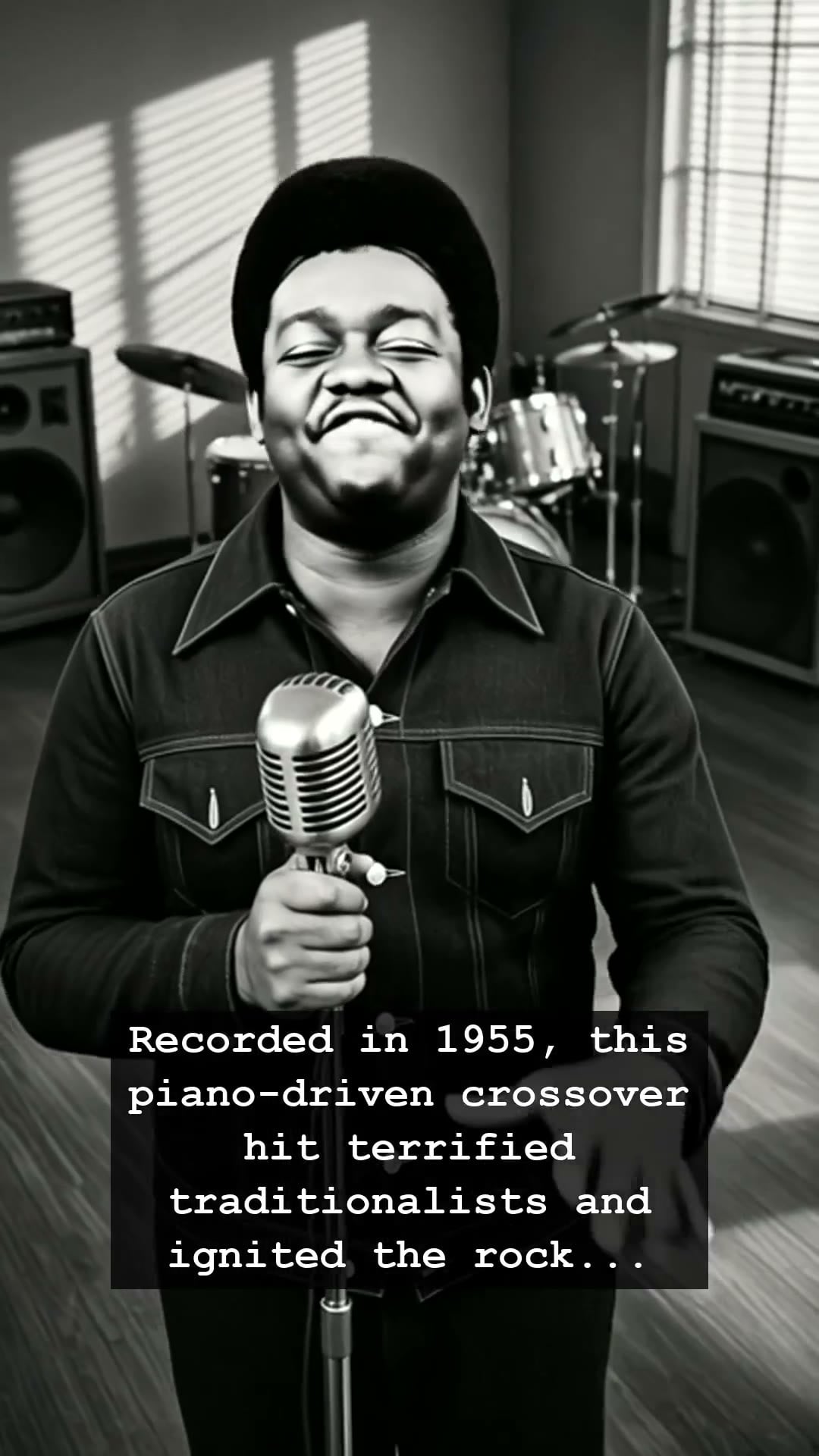
In 1955, the airwaves were still dominated by the polite, polished sounds of traditional pop. But deep in the humid heart of New Orleans, a quiet revolution was simmering behind the ivory keys of a piano. When Fats Domino walked into the legendary J&M Studio, he wasn’t just recording a track; he was about to detonate a cultural bomb that would leave traditionalists trembling in their seats. That driving, relentless rhythm did more than just get people on their feet; it shattered the fragile glass ceiling of American music and paved the way for a decade of seismic change.
Fats Domino was not your typical poster boy for teenage rebellion. With his gentle smile and unassuming demeanor, he carried the soul of the Crescent City in his fingertips. Yet, the music he created was subversive, infectious, and undeniably dangerous to the status quo. When his piano-driven crossover hit hit the streets, it acted as the spark that ignited the entire rock and roll revolution. For a generation raised on the Jukebox era, this was not just a song—it was a visceral, syncopated awakening that turned the industry upside down overnight.
The drama behind the scenes was as thick as the air in those dimly lit recording sessions. While radio stations in many parts of the country fought to censor the rising tide of rock and roll, Fats Domino became an unstoppable force. He didn’t need to shout or perform wild stunts; his boogie-woogie mastery spoke for itself. This music transcended the rigid racial divides of the fifties, forcing disparate audiences to share the same groove. It was the birth of the crossover appeal, a phenomenon that would eventually lead us to the neon heights of Studio 54 and beyond.
Yet, the cost of this sudden fame was steep. The music industry was a treacherous landscape for an artist like Fats Domino, filled with predatory labels and the crushing pressure of relentless touring. Beyond the glossy finish of the hit records lay a reality of back-breaking work and the isolation that often accompanies massive, overnight success. He navigated these murky waters with grace, even as his peers were often chewed up and spat out by the very fame they chased. His legacy remains a testament to the raw, unfiltered talent that managed to pierce through the corporate machinery of the era.
Today, when we listen to those vintage recordings, we aren’t just hearing a piano; we are hearing the heartbeat of an era that changed the world forever. It reminds us of a time before digital perfection, where music was captured in the moment, raw and unpolished. As we look back, we realize that Fats Domino wasn’t just a pioneer of his time; he was the architect of our modern musical landscape. Take a moment today to spin his records and remember the man whose rhythm refused to be silenced, echoing through the halls of history long after the lights went down.