
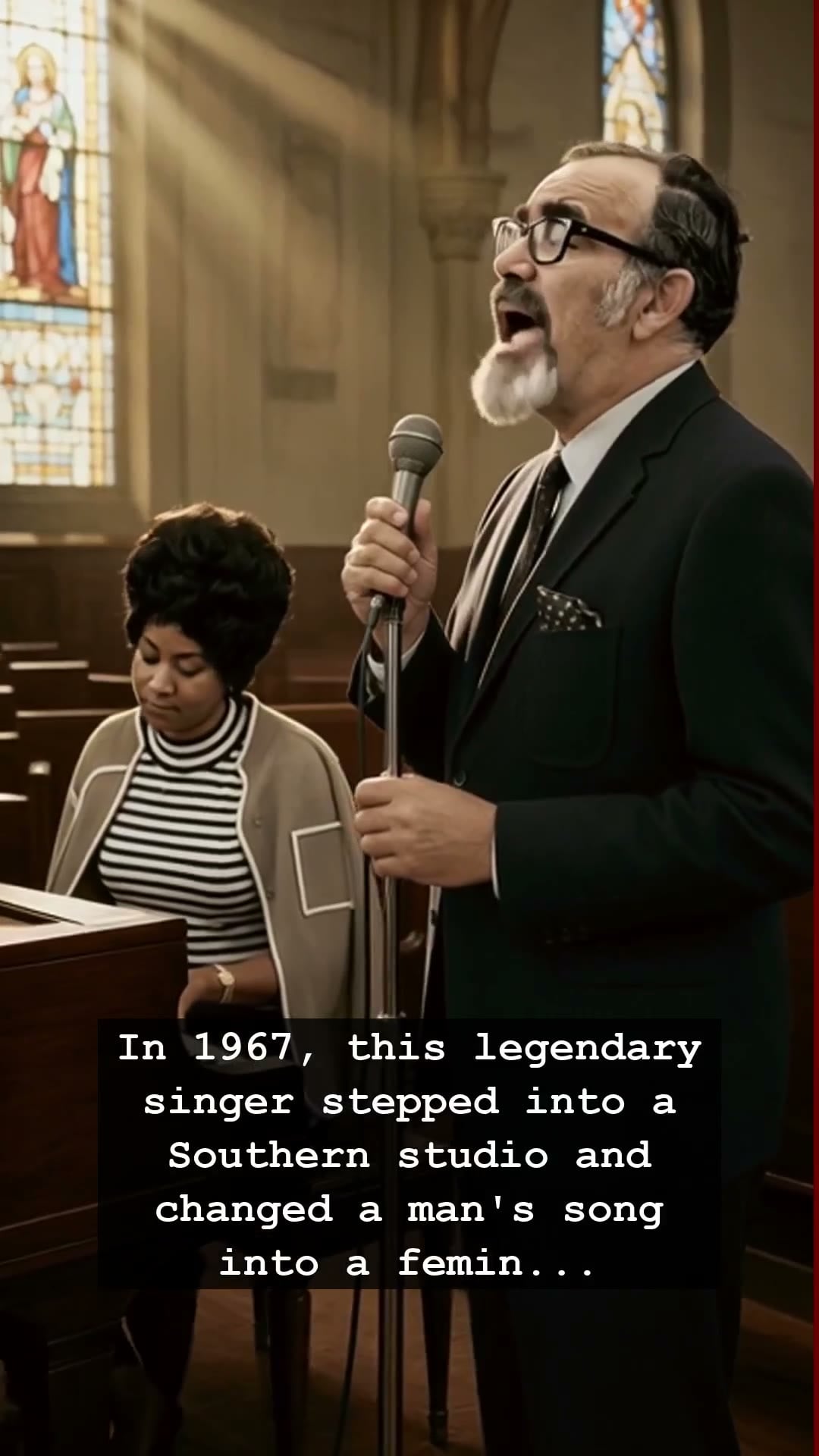
The year was 1967. The American South was a powder keg of social tension, and the air in Muscle Shoals, Alabama, felt heavy with the weight of history. Into this modest recording studio walked Aretha Franklin, a woman whose voice carried the fire of the gospel church and the ache of the blues. She wasn’t just there to cut a track; she was there to claim a legacy. The song was originally penned by Otis Redding, a man’s plea for his woman to come home and serve him. But when Aretha Franklin got behind the microphone, she didn’t just sing the notes—she dismantled the lyrics, reimagined the arrangement, and demanded something far more radical than mere obedience: she demanded respect.
That single recording session transformed a raw soul tune into an unstoppable feminist anthem that would define a generation. When Aretha Franklin spelled out R-E-S-P-E-C-T, she wasn’t just asking for it; she was commanding it. Her sisters, Carolyn and Erma, provided the backing vocals, turning the chorus into a gospel-inflected declaration of independence. It was a cultural earthquake. During an era when the Jukebox was the heartbeat of every roadside diner and the burgeoning civil rights movement was seeking its soundtrack, this song became the definitive roar of a woman claiming her space in a world that consistently tried to quiet her.
To understand the magnitude of this moment, one must look at the landscape of the late sixties. The radio was dominated by the rising tides of Motown and the lingering influence of surf rock, but Aretha Franklin pierced through the static with an authenticity that was impossible to ignore. Her version of Respect hit the airwaves just as the feminist movement was beginning to gather its second-wave momentum, and her voice became the rallying cry for millions. It wasn’t just about a romantic relationship anymore; it was about dignity, labor, and the fundamental right to be recognized as an equal human being.
Beyond the studio walls, the legacy of Aretha Franklin during this period remains a study in raw emotional power. She wasn’t shielded from the pressures of fame or the darkness that often followed musical icons of that decade, yet she remained the Queen of Soul, untouchable in her vocal mastery. She navigated the treacherous waters of the music industry with a steel spine, ensuring that while the business side of the studio might have been run by men, the soul of the music was hers alone. Her impact redefined what an anthem could be, moving it away from lighthearted pop and into the realm of social consciousness.
Even decades later, hearing those opening notes triggers a visceral response. It is a reminder of a time when music served as a bridge between personal struggle and collective triumph. Aretha Franklin gave us more than just a hit record; she gave us a timeless standard for how to carry oneself in a demanding world. As we look back on the era of analog tapes and soul-stirring radio, her voice remains as vibrant and revolutionary as the day it was captured on tape. What does that song mean to you when you hear it today?