
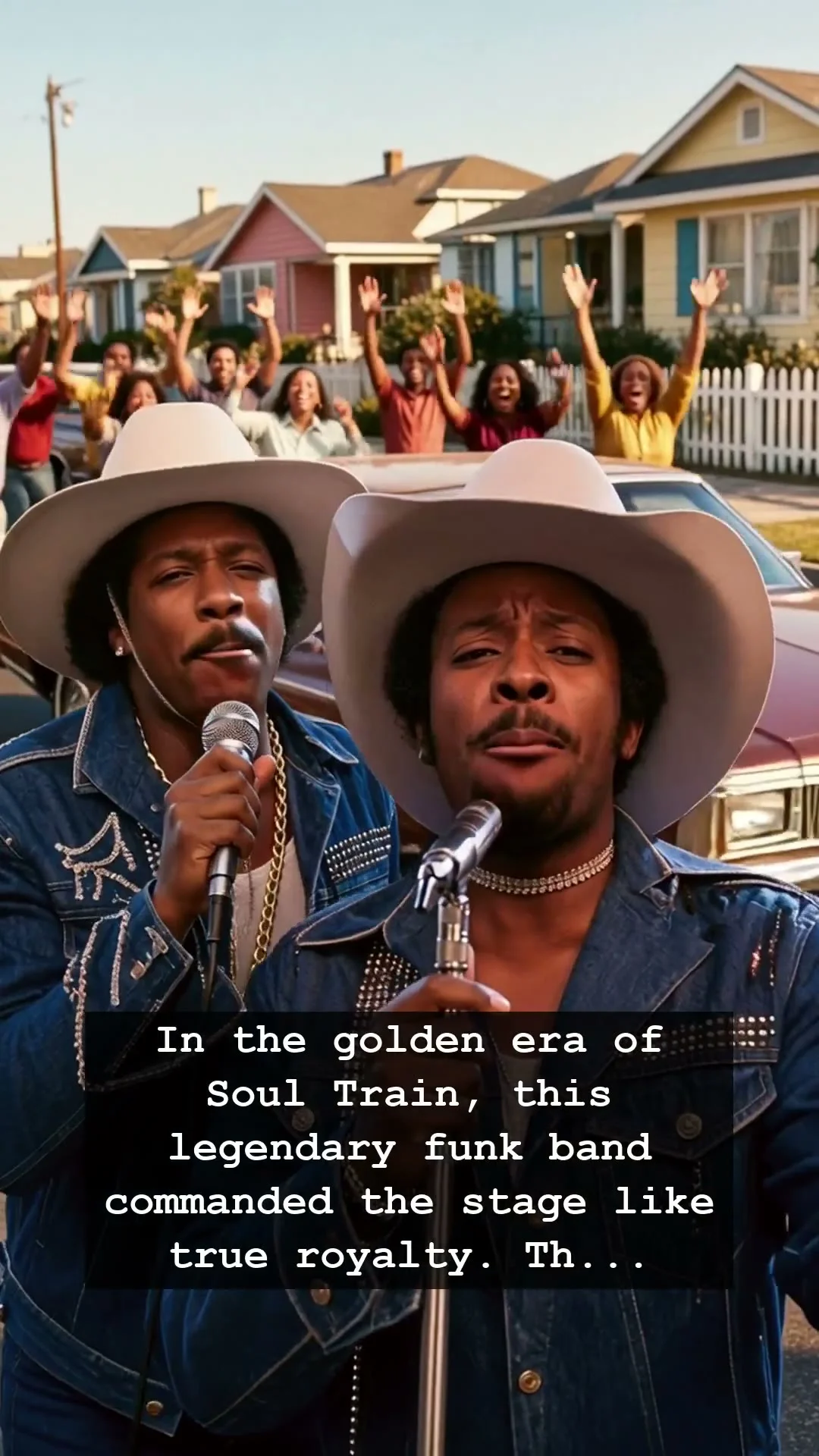
The year was 1979, the air was thick with the scent of hairspray and expensive cologne, and the iconic Soul Train line was pulsing with a rhythm that felt like it could shake the very foundations of the studio. While disco was fighting for its life against the impending waves of arena rock, one group stepped onto that polished stage and reminded the world that funk was not just a genre—it was a way of life. The Gap Band, with their brotherly chemistry and an undeniable magnetism, didn’t just perform; they held court. Watching them under those bright, swirling lights was an electric experience that defined the sound of an entire generation, proving that beneath the flashy glitter of the late seventies, raw, unapologetic talent was the true king.
Formed by brothers Charlie, Ronnie, and Robert Wilson, the group took their name from the streets of Greenwood, Archer, and Pine in Tulsa, Oklahoma. It was a humble beginning that stood in stark contrast to the global stage they would eventually command. In an era where the Jukebox was the heartbeat of every neighborhood diner and the radio was the primary portal to the soul, The Gap Band became architects of the dance floor. Their sound was a masterclass in tension and release, blending synthesizers with fat, walking basslines that made it impossible to stay in your seat. They weren’t just musicians; they were the conductors of pure, unadulterated joy for a generation growing up amidst changing political tides and shifting cultural norms.
Yet, behind the synchronized dance moves and the high-energy charisma displayed on Soul Train, there was a relentless, grinding pressure to remain relevant. The music industry in the late seventies and early eighties was a predatory beast. Many artists succumbed to the vices of the era, from the haze of Studio 54 to the crushing weight of substance abuse that claimed so many legends of that golden age. The Gap Band faced these demons with the same resilience they poured into their records. Their survival wasn’t just a matter of talent; it was a matter of family, of keeping their bond intact while the lights of fame threatened to blind them. That struggle, that desperate push to stay atop the charts while the industry began its pivot toward the cold, electronic sounds of the new decade, gives their music a poignant edge even today.
When we look back at their reign, we aren’t just remembering a set of catchy songs. We are remembering the texture of a time when the Walkman was becoming a staple of urban life and the music video was about to change the world forever. The Gap Band bridged the gap between the gritty soul of the seventies and the polished, high-tech funk of the eighties. They were the bridge that allowed audiences to transition from the era of Woodstock to the era of MTV without losing their groove. Their legacy is etched into every synthesized bass hit that still manages to clear a dance floor today.
Even now, decades after they first ignited the Soul Train stage, the music of The Gap Band resonates with a timeless, funky weight. It reminds us of a simpler time of vinyl records, late-night radio, and the undeniable power of a band that truly felt like royalty. As you listen to those classic tracks today, close your eyes and let the rhythm carry you back to that golden age; can you still feel the magic of their unstoppable reign?