
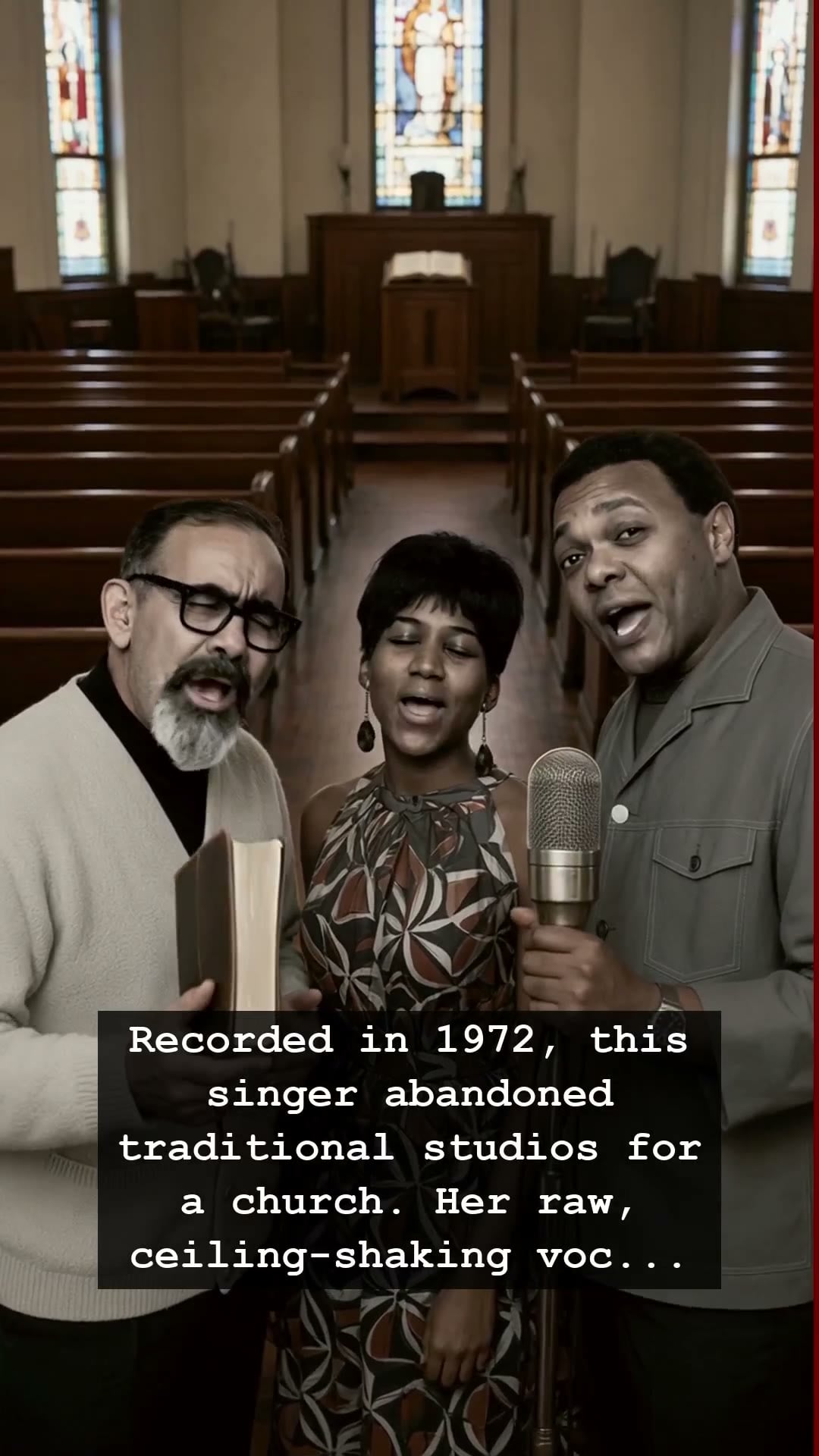
It was 1972. The air in Los Angeles was thick with the scent of jasmine and the anticipation of a musical revolution. Inside the New Temple Missionary Baptist Church, a woman sat before a piano, her presence radiating a gravity that seemed to bend the very wooden pews. This was not a polished, sterilized recording studio where technicians tweaked knobs and spliced tape. This was Aretha Franklin, the Queen of Soul, abandoning the gilded cages of industry standards to return to the sanctuary that birthed her voice. She was not there to chase a hit; she was there to commune with something sacred.
For two nights, the world outside stopped. While the rest of the music industry was obsessed with the emerging glitter of the 1970s and the rising influence of MTV-ready aesthetics, Aretha Franklin chose to go backward to move forward. She stepped into the church, stripped away the excess, and captured lightning in a bottle. The resulting live album, Amazing Grace, remains one of the most powerful vocal performances ever committed to tape. Her voice was not merely singing; it was a physical force, ceiling-shaking and earth-moving, that stripped away the listener’s defenses. It was a raw, unfiltered cry that transcended the barriers of the era.
This departure from the norm was a bold act of defiance. Industry executives were baffled by her choice to forgo a modern facility, but Aretha Franklin knew that the acoustics of the church were the only place that could hold the weight of her soul. She was at the peak of her career, yet she felt the pull of her gospel roots, an instinct that turned her back toward the hymns of her childhood. In those hallowed halls, accompanied by the soulful backing of the Southern California Community Choir, Aretha Franklin transformed a recording session into a transformative spiritual experience.
Looking back at the 1970s, a decade defined by the pulsing neon of Studio 54 and the stadium-filling anthems of Arena Rock, this moment stands as a quiet, powerful anomaly. It serves as a reminder that behind the glitz and the manufactured drama of celebrity culture, true genius often hides in the simplest of places. Her performance during those two nights was a testament to the fact that passion, when captured in its most authentic form, never ages. It is the kind of sound that hums through a vintage turntable with the same urgency as it did when the master tapes were first spinning.
Today, we return to these tracks because they represent a purity that is increasingly rare. Aretha Franklin gave us more than just a gospel record; she gave us a piece of her history, etched into the grooves of a vinyl disc. Whether you were there to experience the impact of her career as it unfolded or you are discovering these songs for the first time, her voice continues to serve as an anchor in an ever-changing world. When was the last time you let the Queen of Soul take you to church and wash away the noise of today?