
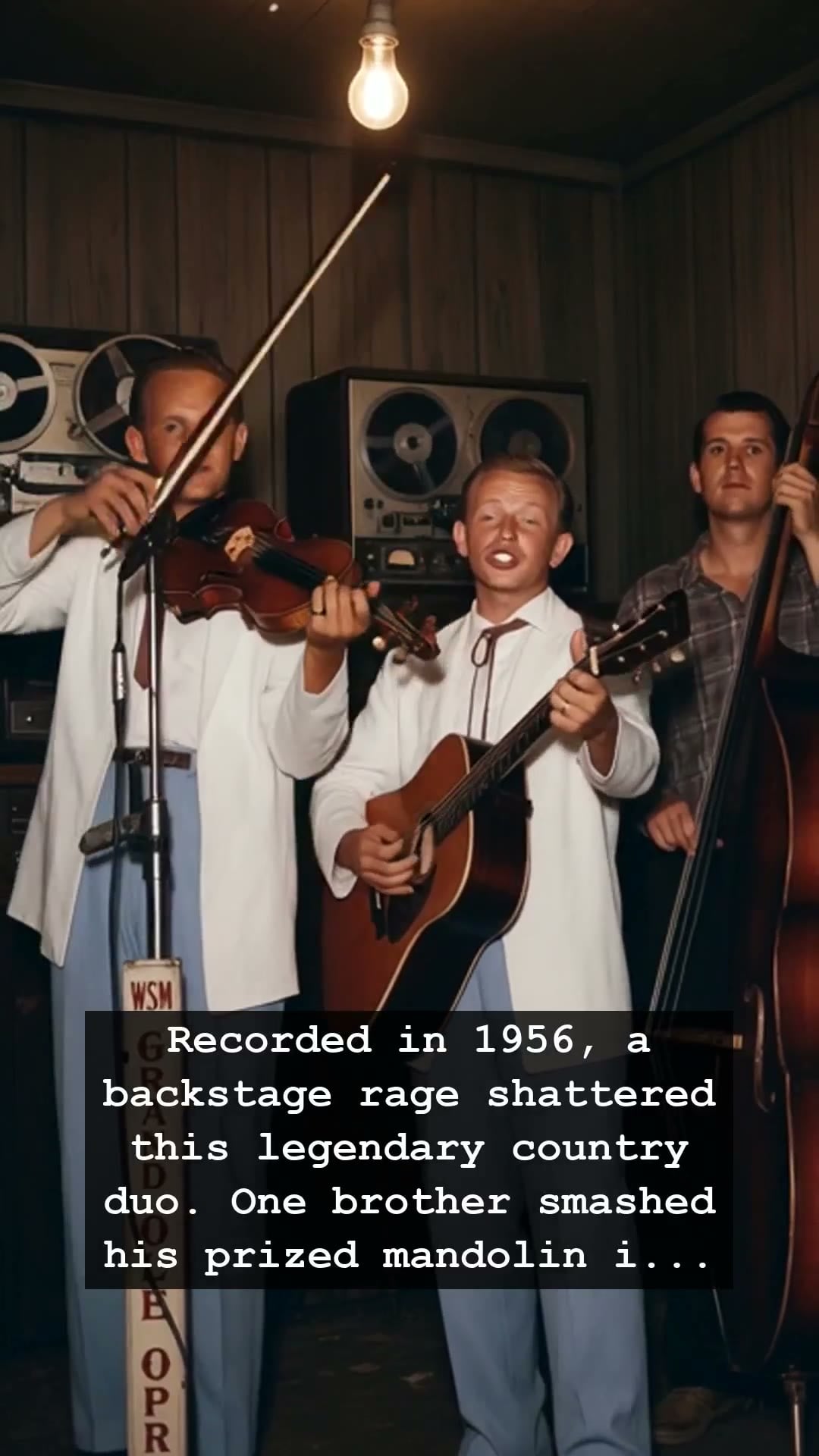
In the golden age of country music, there was no sound more hauntingly beautiful than the blood harmonies of The Louvin Brothers. To listen to Ira and Charlie Louvin is to hear the very essence of the Appalachian spirit captured in 1950s lacquer. Their voices intertwined with a chilling, gospel-infused precision that seemed divine, yet behind the scenes, their lives were anything but heavenly. While fans of the era were busy dropping nickels into jukeboxes to hear their latest tracks, the brothers were trapped in a volatile dance of resentment that would eventually turn their stage presence into a powder keg of unresolved trauma and rage.
The breaking point arrived in 1956, a year where the tension between the two had reached a fever pitch. Known for their meticulous arrangements and traditional values, the facade crumbled backstage during a moment of intense frustration. In a blind, uncontrollable fury, Ira Louvin grabbed his prized mandolin—an instrument he had poured his soul into—and smashed it against the wall. The sound of wood splintering wasn’t just the destruction of a musical tool; it was the final shattering of their brotherhood. The incident became a dark legend among insiders, a chilling reminder that the sweetest melodies are often born from the most bitter human struggles.
This explosive confrontation was not an isolated event but the culmination of a lifelong clash of personalities. Ira was a man of tempestuous spirits, often battling his own demons with the help of the bottle, while Charlie struggled to maintain the professional standard that had catapulted them to fame at the Grand Ole Opry. Their music was a testament to the conflict of their lives—a constant push and pull between the sacred and the profane. For their audience, The Louvin Brothers represented a simpler time, yet their story is a gritty, authentic look at the high cost of fame in the mid-century music industry.
Decades later, the tragedy of The Louvin Brothers still resonates because it mirrors the darker reality of show business that the shiny surface of mid-century Americana often tried to conceal. Their influence stretches far beyond the country genre, touching the hearts of rock musicians and folk singers who recognize the raw, unfiltered pain embedded in their vocal delivery. We listen to their records today not just for the technical perfection of their harmonies, but for the ghost of the men behind them—men who could hold the world in awe while their own private lives were falling apart at the seams.
As we look back at the era of the Walkman and the vinyl resurgence, the story of The Louvin Brothers serves as a poignant, dramatic anchor. It reminds us that every legend has a shadow, and every masterpiece of sound carries the weight of the human condition. When you play their records tonight, listen closely to the cracks in the silence between their notes; you might just hear the echo of that smashed mandolin, a permanent scar on a legendary career that defined the soul of American country music.