
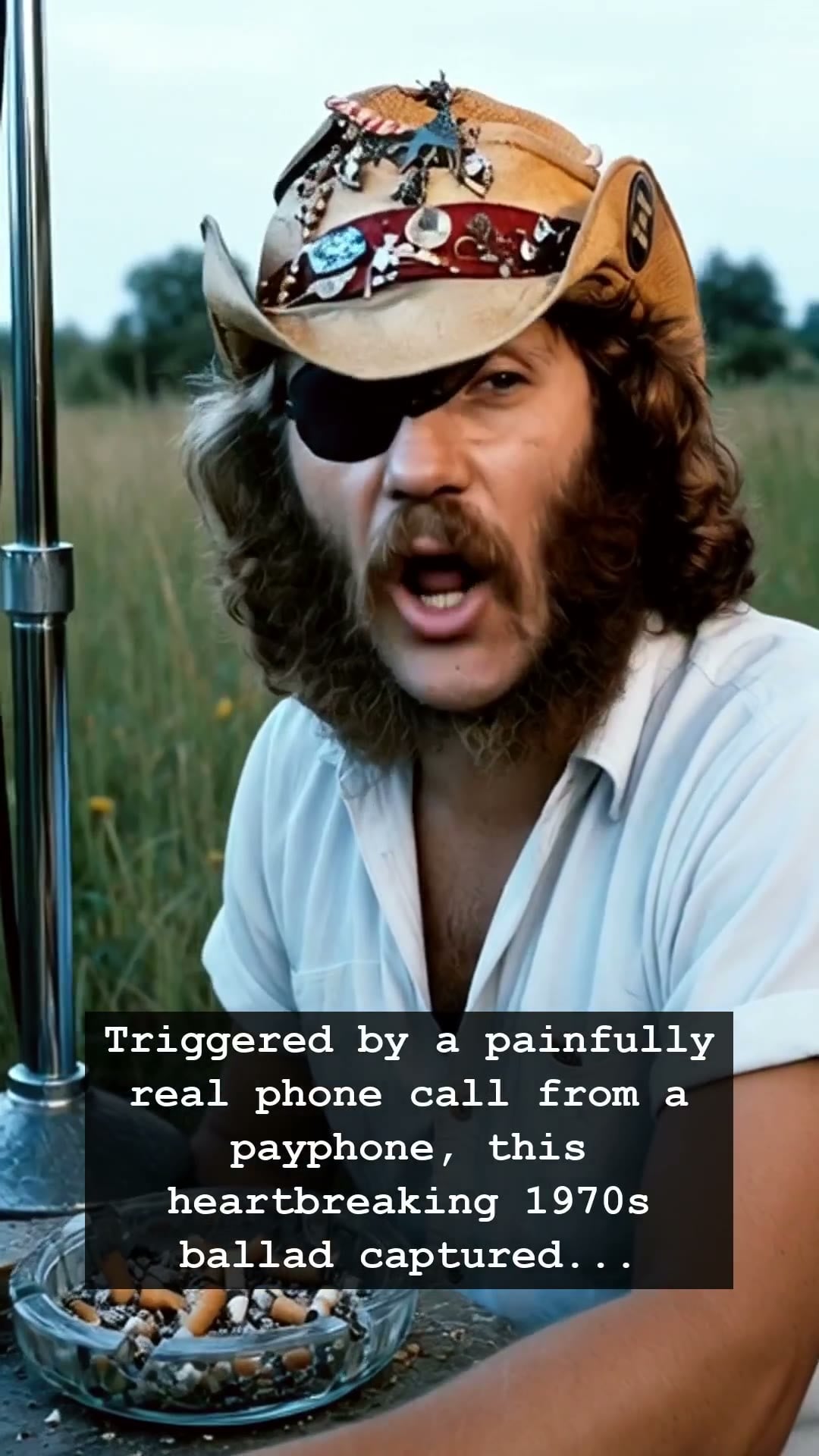
The year was 1972, a time when the hum of a distant jukebox and the crackle of a vinyl record could define the emotional landscape of an entire generation. In the hazy, smoke-filled air of a recording studio, a man known more for his whimsical children’s books and sardonic wit was about to deliver one of the most agonizingly raw vocal performances of the decade. Shel Silverstein, the eclectic genius behind The Giving Tree, was not merely a poet or a cartoonist; he was a man capable of channeling deep, existential heartbreak into melodies that lingered long after the needle reached the end of the groove. The story behind his haunting track from that era remains one of the most poignant footnotes in American musical history.
It began with a payphone—a cold, metallic relic of a bygone era. For anyone who lived through the seventies, the image of a payphone is inextricably linked to the tension of late-night calls and the weight of words spoken into a plastic receiver. Shel Silverstein received a call that changed everything. On the other end of the line was the woman he loved, informing him with agonizing clarity that she was marrying someone else. The world seemed to stop, the static on the line echoing the sudden void in his heart. Instead of retreating into silence, he channeled that visceral pain into his music, capturing the exact, devastating moment of heartbreak that feels just as sharp today as it did over fifty years ago.
This wasn’t the polished, synthesized pop sound that would soon dominate the airwaves of the burgeoning MTV era. This was stripped-back, authentic folk-country—a style that demanded the listener feel every ounce of the performer’s anguish. Shel Silverstein brought a rugged, gravelly depth to his music that made him a cult figure among those who preferred their lyrics with a side of bitter truth. When he sang, you weren’t just hearing a song; you were witnessing a man unraveling in real-time. It was the antithesis of the shiny, manufactured glamor often associated with the decadence of Studio 54 or the high-octane stadium tours of the time.
Why does this story still resonate so deeply in our modern, digital age? Perhaps because the pain of losing a love to another remains a universal human constant, unaffected by the evolution of technology or musical trends. When you listen to Shel Silverstein recount that phone call through his songwriting, you are transported back to a time before instant messaging and social media, when a long-distance call was a momentous, life-altering event. The sincerity in his voice serves as a bridge to a past where emotions were felt deeply and expressed without the filter of irony.
As we look back at the giants of American music from 1955 to 1985, we often focus on the stadium-fillers and the chart-toppers. Yet, it is often these small, intimate moments of human failure and grief that provide the most lasting connection. Shel Silverstein proved that even the most celebrated creators are tethered to the same heartbreak as the rest of us. Next time you find yourself browsing through your vintage vinyl collection, pull out a record from the early seventies and listen closely. You might just hear the faint, lingering sound of a payphone ringing in the distance, reminding us all of the stories that define our lives.