
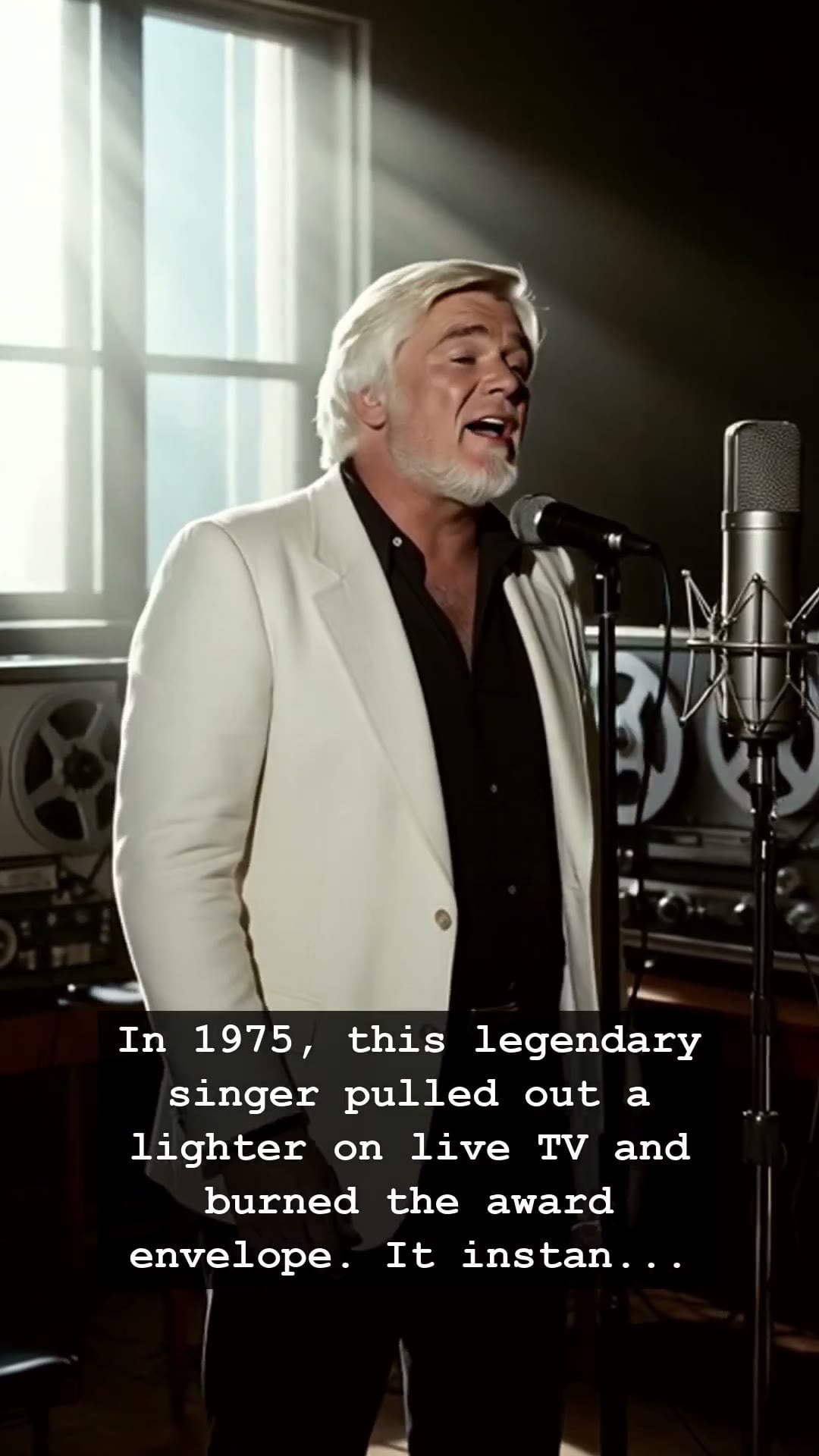
The year was 1975. The air in the Shriner’s Auditorium in Los Angeles was thick with the scent of hairspray and expensive cologne, and the atmosphere was buzzing with the high-stakes glitz of the CMA Awards. Millions of Americans sat in their living rooms, transfixed by the glowing television screens that served as the heartbeat of the decade. They were waiting for a moment of grace, a validation of the country music royalty they cherished. Instead, they witnessed one of the most self-destructive acts in the history of the industry, courtesy of the Silver Fox himself, Charlie Rich.
Charlie Rich was the consummate stylist, a man whose voice could glide effortlessly between the soulful depths of the blues, the grit of rockabilly, and the smooth polish of country pop. With massive hits like Behind Closed Doors and The Most Beautiful Girl, he had reached the summit of his profession. He was the reigning CMA Entertainer of the Year, tasked with presenting the same award to his successor. But as Charlie Rich stepped into the spotlight, the world sensed something was wrong. His speech was slurred, his eyes were heavy, and the weight of the era’s excesses had clearly taken its toll on a man who had struggled with the dark side of fame for years.
What followed remains a haunting piece of television history. Instead of reading the name of the winner, John Denver, from the sealed envelope, Charlie Rich pulled a cigarette lighter from his pocket. In a flash of defiance that stunned the audience into a suffocating silence, he set the envelope ablaze. As the paper curled into black ash in his hands, he mumbled his announcement before stumbling away. It was a visceral, drunken revolt against a system he felt had lost its soul. In those few seconds, Charlie Rich did not just burn a piece of paper; he incinerated the public image he had spent decades cultivating.
The fallout was immediate and catastrophic. Radio stations stopped playing his records, and the industry that had once held him up as a titan turned its back on him overnight. For Charlie Rich, the flame had been a desperate cry of frustration against the changing winds of an industry moving toward a more commercial, pop-centric sound. He was a musician who craved the authenticity of the old blues shacks, but he found himself trapped in the polished machinery of 1970s superstardom. His act of defiance was the ultimate expression of the pressure-cooker environment that defined the mid-70s music scene.
Today, the legend of the Silver Fox is often reduced to that one fiery moment. Yet, to remember him only for that night is to ignore the velvet-smooth genius of his earlier recordings. He was a bridge between genres, a man who possessed a deep, raw talent that transcended labels. Charlie Rich serves as a cautionary tale about the volatility of celebrity and the thin line between being a star and becoming a cautionary footnote. As we look back through the lens of history, we see not just a man losing his way, but a poignant reminder of the humanity hidden behind the stage lights of a bygone era.