
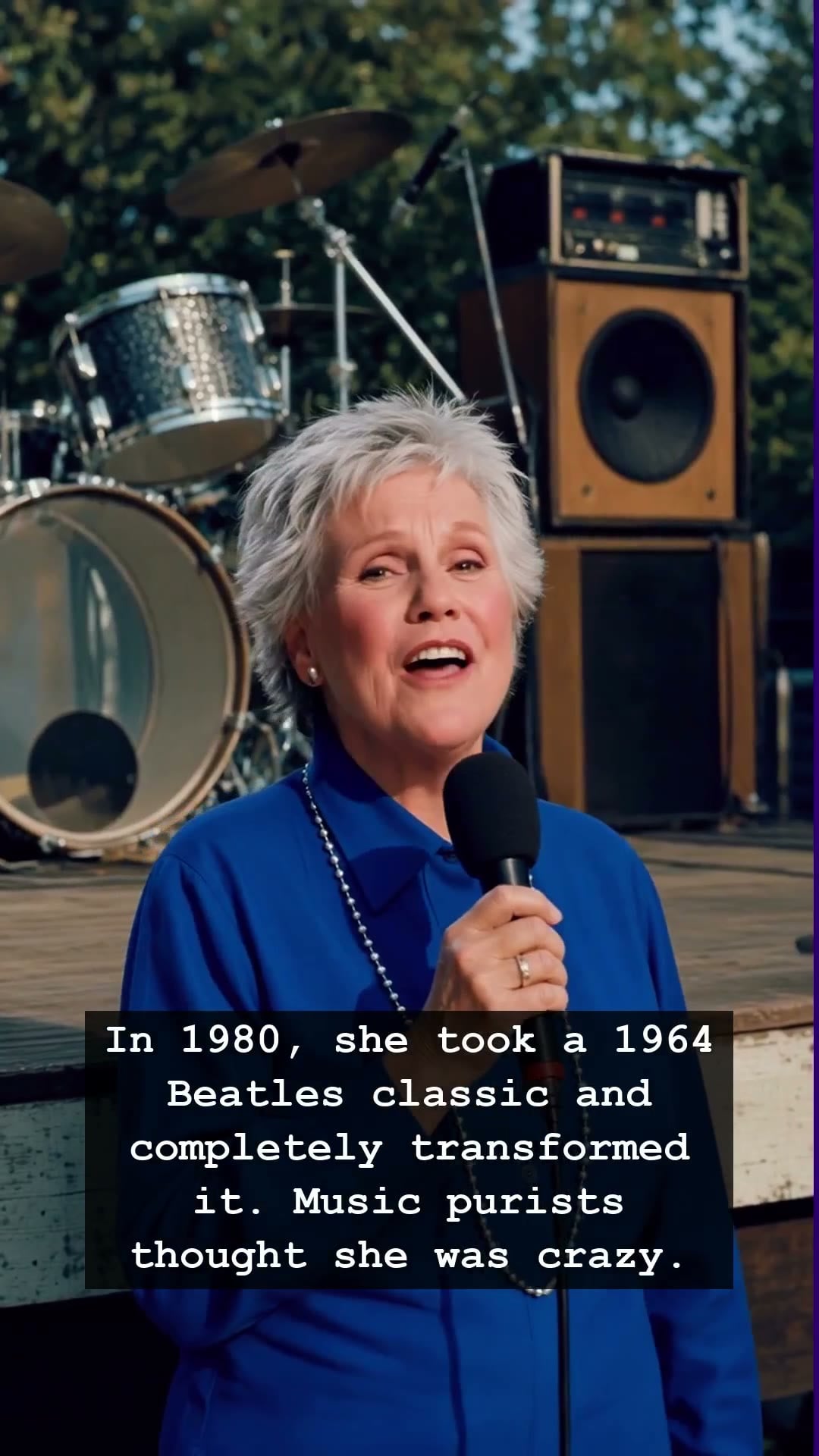
In the golden age of the late 1970s and early 1980s, radio waves were ruled by the polished sounds of the Walkman era and the rising dominance of MTV. Amidst this backdrop of synthesizers and heavy production, a Canadian voice cut through the noise with a quiet, daring rebellion. Anne Murray, a name synonymous with warmth and vocal clarity, did the unthinkable in 1980: she looked at a 1964 Beatles classic, I’m Happy Just to Dance with You, and decided to tear it down to its very foundation. When she stepped into the studio, music purists were whispering that she was making a mistake. The Beatles were untouchable, and tinkering with their pop perfection was considered a musical sacrilege.
Yet, Anne Murray saw something others couldn’t hear. She didn’t just cover the song; she reimagined it through a country lens, stripping away the frantic energy of the original and replacing it with a slow, soulful delivery that dripped with emotional sincerity. As the track hit the airwaves, the initial skepticism evaporated. Fans who had grown up in the jukebox era and were now finding comfort in the shifting landscape of country-pop embraced her rendition wholeheartedly. It was a bold country twist that didn’t just garner critical attention; it climbed straight to the top of the charts, proving that a timeless melody, when treated with enough artistic bravery, can bridge the gap between genres.
This success wasn’t just a win for a single song; it was a testament to the transformative power of Anne Murray during a pivotal time in music history. While many of her contemporaries were chasing the disco lights of Studio 54 or the aggressive riffs of budding arena rock bands, Anne Murray remained an anchor of melodic grace. Her decision to slow down a high-tempo Beatles hit reflected a broader cultural shift—a desire for songs that felt human, lived-in, and authentic. She navigated the pressure of industry expectations with a stoic calm that defined her career, often finding her best work in the quiet spaces between the noise.
Looking back, the story of this cover is a window into the artistic tension of the early 80s. It serves as a reminder that the most memorable music often comes from moments of risk. For those of us who grew up spinning records on a turntable, Anne Murray provided a soundtrack that felt like home, even when she was breaking the rules of the establishment. Her version of the song remains a staple of nostalgia, a gentle ghost of a decade that was simultaneously obsessed with the future and deeply connected to its past.
Today, when we hear those familiar opening chords, it takes us right back to 1980. We aren’t just listening to a cover; we are revisiting the courage it took for a country-pop star to reshape history. Do you remember where you were when you first heard it? Whether you were driving down a lonely highway or sitting by the radio in your living room, the legacy of Anne Murray continues to resonate, proving that true artistry never really goes out of style.