
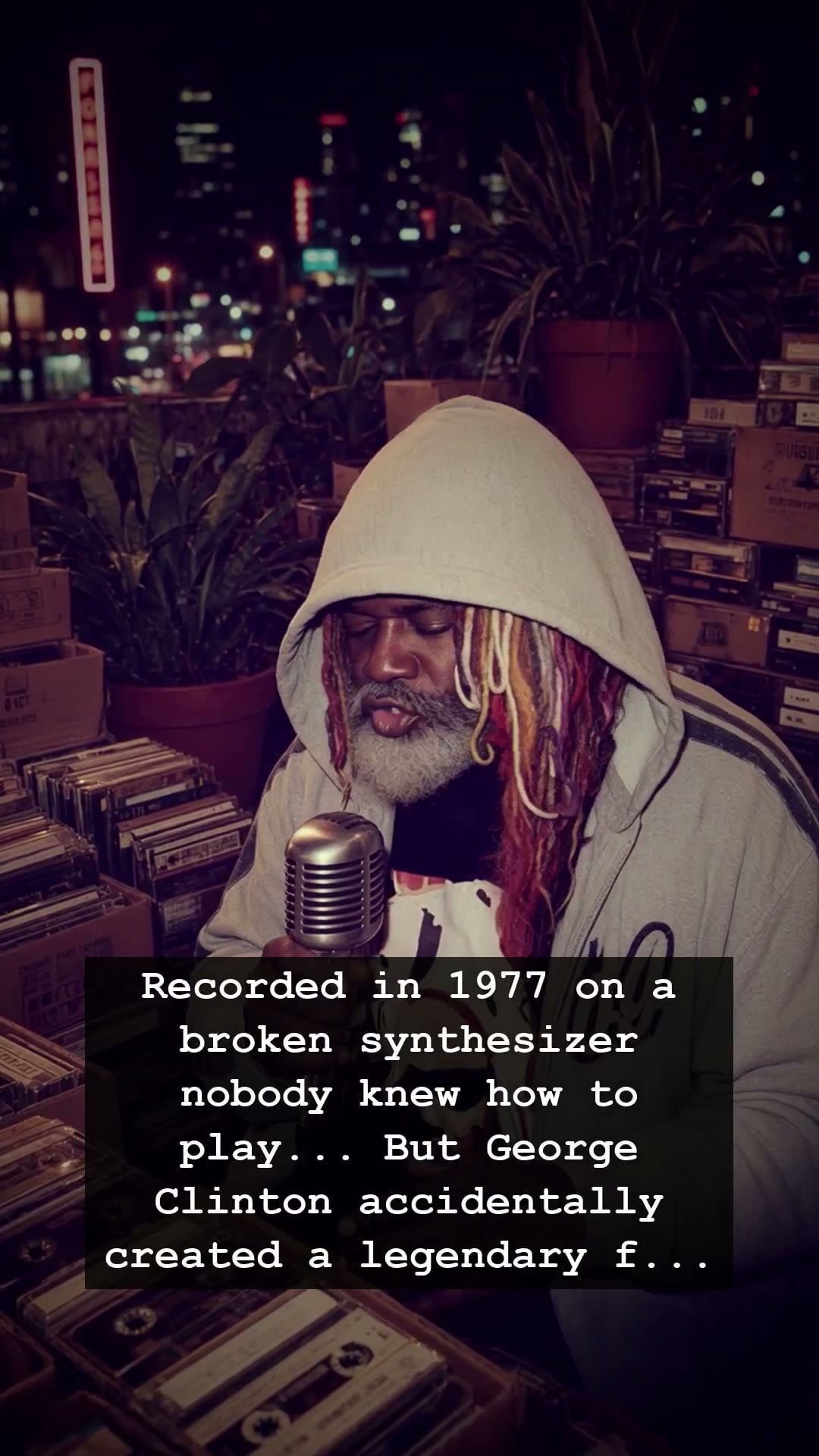
It was 1977, the air in the studio was thick with the scent of vinyl and creative desperation. George Clinton, the eccentric mastermind behind Parliament-Funkadelic, stood before a brand-new synthesizer that seemed more like a prop from a science fiction movie than a musical instrument. None of the seasoned session musicians knew how to operate the blinking lights or the complex knobs of this futuristic machine. In that moment of technical confusion, instead of throwing the equipment out, George Clinton dared his band to simply play. What resulted was not just a studio error, but a sonic revolution that would define the era of P-Funk.
As the fingers of his bandmates danced across the keys of that broken synthesizer, a raw, jagged, and undeniably funky bassline emerged. It was an accident that transcended standard music theory. George Clinton possessed an uncanny ability to hear gold in the noise. He recognized that the machine was not broken, but rather it was singing in a language the world had never heard before. That unintended recording became the backbone of a legendary anthem, proving that the most iconic moments in music history are often born from the chaotic friction of experimentation rather than careful planning.
To understand the magnitude of this achievement, one must place themselves back into the cultural landscape of the late seventies. The world was transitioning from the polished grooves of disco to the grittier, more experimental textures of synth-infused R&B. While other artists were hiding behind traditional structures, George Clinton was building a Mothership out of imagination and electrical hums. This particular 1977 session captured the very essence of his genius: the willingness to embrace the unexpected. His studio was a playground where drugs, high-fashion, and profound musical intellect collided, leaving behind a trail of albums that still pulse through the veins of modern hip-hop and electronic music.
The impact of that accidental hit rippled through the decades, finding its way into the crates of legendary hip-hop producers who would later sample George Clinton to create the sound of the nineties. It was the birth of a futuristic funk identity that felt both ancient and light-years ahead of its time. Whether it was the influence of the sprawling, cosmic aesthetics of the P-Funk collective or the way their rhythm sections dictated the movement of dance floors, George Clinton remained the gravitational center of the scene. He taught us that perfection is overrated, and that true artistic brilliance often lies in the imperfections.
Today, when we spin those old records, we are not just listening to notes on a page, but to the ghosts of a studio that refused to follow the rules. The legacy of George Clinton is one of bold defiance and relentless innovation. He took the confusion of a cold machine and turned it into a heartbeat for millions. So the next time you hear those deep, resonant synth lines, remember the smoke-filled studio in 1977 where the rules were broken, the accident was embraced, and the funk was born to last forever.