
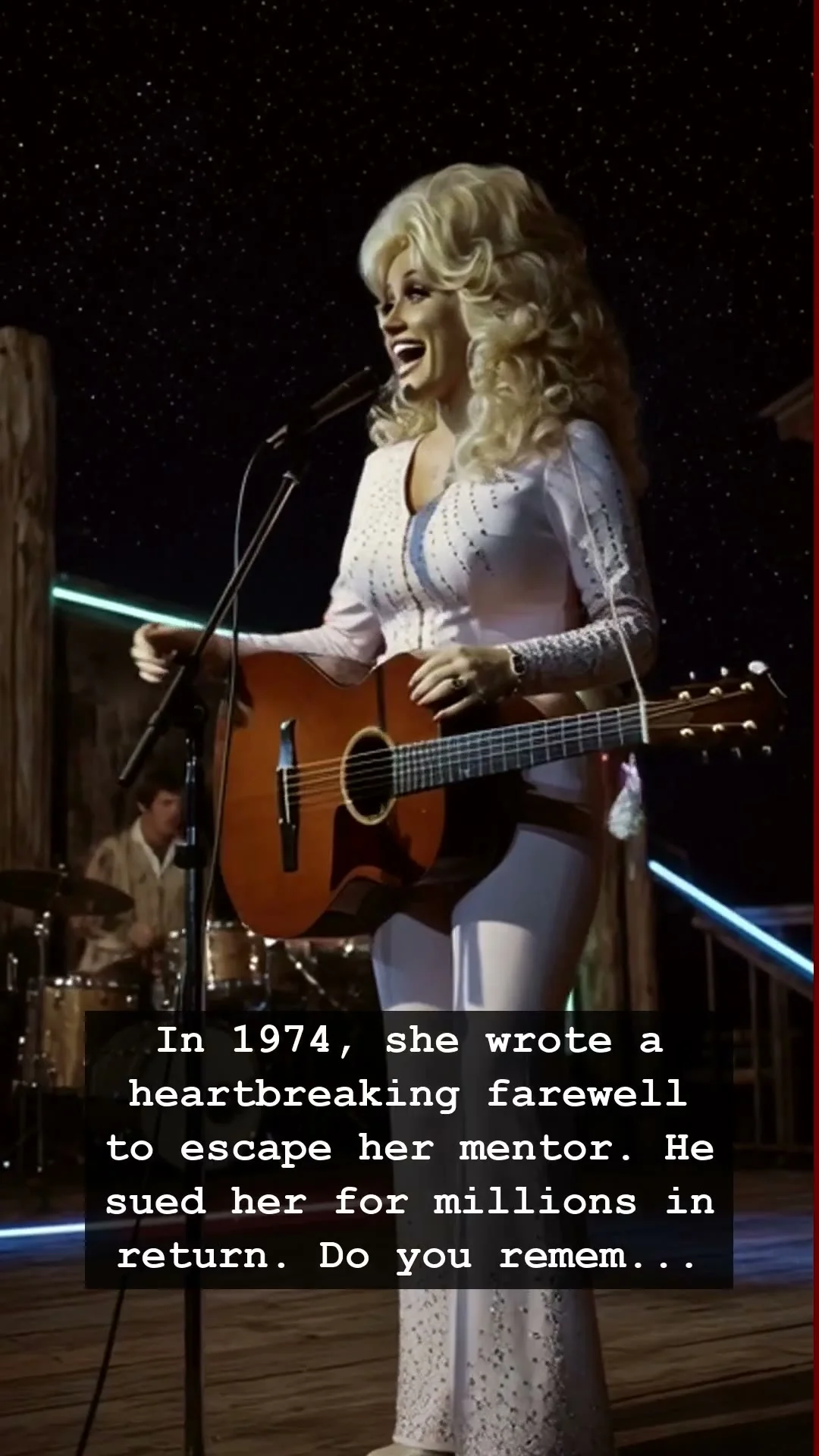
The year was 1974. The neon lights of Nashville were burning bright, but inside a dim recording studio, a storm was brewing that would change country music forever. Dolly Parton, the rising star with a voice as sweet as Appalachian honey, was standing before Porter Wagoner, her mentor, partner, and the man who had effectively owned her professional life for seven grueling years. She knew the time had come to break free, but she wasn’t handing in a resignation letter. Instead, she offered him a song—a handwritten farewell that would eventually become one of the most poignant compositions in American history.
For years, Porter Wagoner had been the gatekeeper of Dolly Parton’s career. Their chemistry on stage was magnetic, a staple of television screens across the nation, but behind the scenes, the dynamic was suffocating. Dolly felt she was being held back, unable to fully blossom into the icon she was destined to become. When she finally told Porter she was leaving to pursue a solo path, the reaction was explosive. He was furious, feeling betrayed by the protégé he had plucked from obscurity. He didn’t just walk away; he slapped her with a three-million-dollar lawsuit, claiming breach of contract. It was a cold, calculated move to keep her anchored to his orbit.
But Dolly Parton had a weapon far more powerful than legal filings: her songwriting. That day, she sat down and poured every ounce of her hurt, gratitude, and resolve into a single, aching melody. She played I Will Always Love You for Porter in his office. As she sang the final lyrics, the silence in the room was heavy, broken only by Porter’s voice telling her it was the best song he had ever heard. Even in the heat of his anger, he could not deny the sheer, gut-wrenching beauty of the masterpiece she had created to say goodbye.
The song became an anthem for transition, loss, and the bittersweet nature of growth. While the world remembers the track through various covers in the decades that followed, those who lived through the seventies remember the raw, acoustic honesty of the original. It was a moment that defined an era of music, standing in stark contrast to the glitz of disco or the wild excess of stadium rock. It was personal, intimate, and entirely, unmistakably Dolly.
Looking back, this moment remains a defining chapter in the history of American music. It proved that sometimes, the greatest art is born from the deepest personal conflicts. Dolly Parton walked away from the security of a mentor who didn’t want her to fly, choosing instead the lonely, uncertain road to independence. She paid the price, navigated the drama, and emerged as a global superstar. Today, whenever we hear those opening notes, we aren’t just listening to a hit song; we are witnessing the exact moment a woman chose her own destiny. Do you remember the first time those lyrics stopped you in your tracks?