
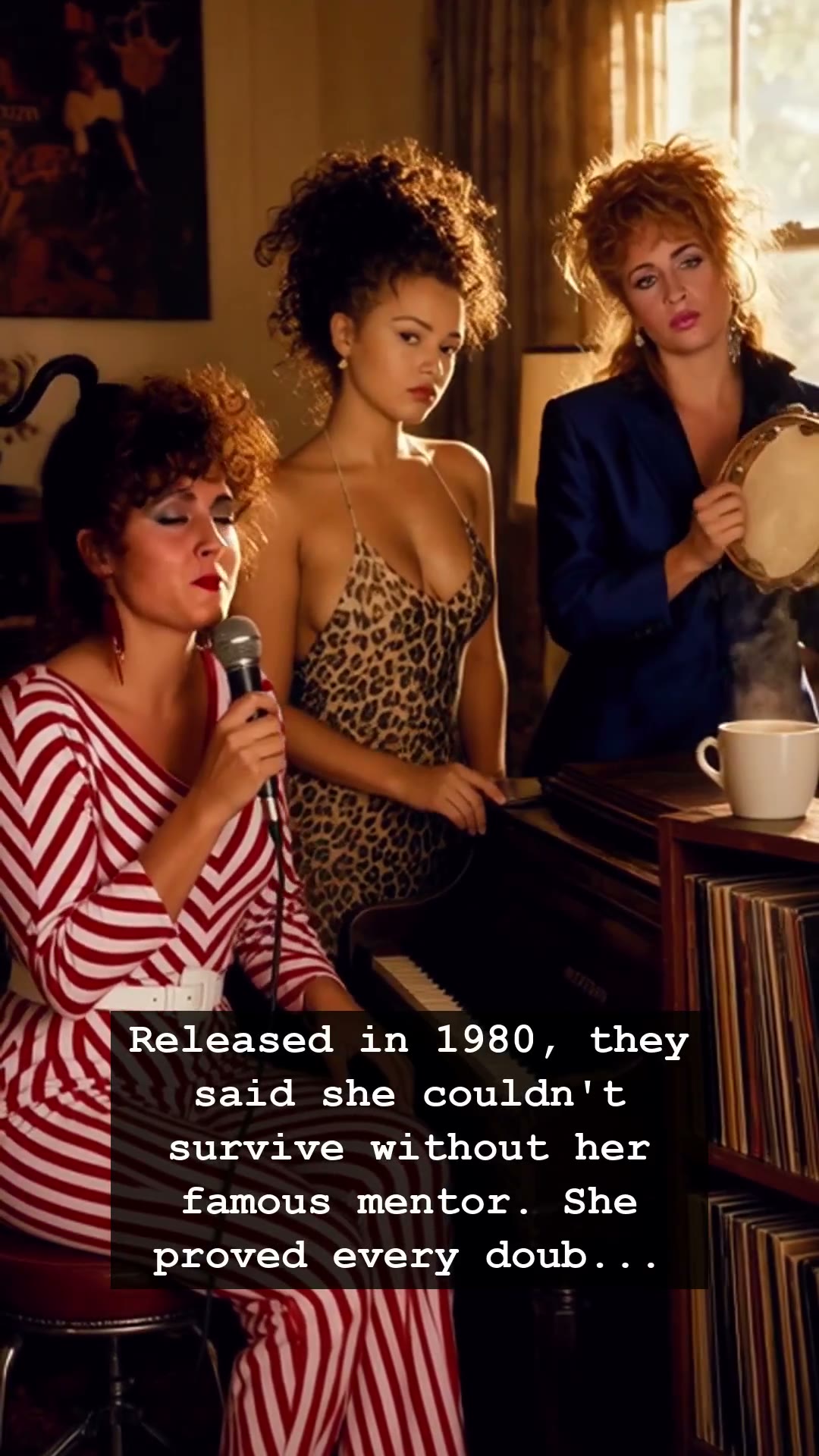
In the golden era of the late seventies, the industry had a set of unwritten rules, and for a white woman navigating the deep, soulful waters of Motown, those rules were suffocating. The music world was convinced that Teena Marie was merely a satellite orbiting her legendary mentor, Rick James. Executives whispered behind closed doors that she lacked the creative autonomy to stand alone. They assumed that without James’s guiding hand and production muscle, the girl they called Lady T would simply fade into the neon flicker of a disco ball. But in 1980, Teena Marie did something that silenced every boardroom doubter and changed the trajectory of R&B history forever.
Locked away in a studio, stripped of the protective shield that many believed she needed, Teena Marie channeled her isolation into creation. She wasn’t just performing; she was writing, arranging, and pouring the raw, unfiltered essence of her soul onto analog tape. When she emerged, she brought with her a masterpiece that defied every racial and stylistic boundary of the time. The song was a powerhouse crossover hit, a rhythmic, undeniable anthem that demanded the world take notice. It was a moment of profound artistic rebellion, where talent proved stronger than the fragile narratives constructed by record labels.
To understand the magnitude of this triumph, one must remember the atmosphere of 1980. The Jukebox was beginning to shift from the pure funk of the seventies toward the sleeker, electronic precision that would define the next decade. Yet, Teena Marie kept the heartbeat of authentic soul alive. Her music bridged the gap between the gritty, authentic sound of Motown and the evolving pop sensibilities of the early eighties. She navigated the pressure of the industry with a fierce, quiet intensity that few artists of her generation could replicate.
What made the success of Teena Marie so magnetic was the sheer authenticity radiating from her voice. She didn’t just imitate the sounds of the great soul singers who came before her; she lived them. Even as the culture was moving toward the impersonal, she maintained a visceral connection to her audience. Whether she was pouring her heart out over a ballad or commanding the dance floor with a funk-infused groove, she commanded the room. This was an era before digital polish, where a performance was measured by how much of yourself you were willing to leave on the stage.
Today, the legacy of Teena Marie remains a lighthouse for independent artistry. She proved that when the noise of the industry grows too loud, the only solution is to retreat into the work itself. Her story reminds us of a time when music felt dangerous, essential, and deeply personal. It was a time when a single song could dismantle a stereotype and solidify a legend. Decades later, her melodies still dance through our memories, serving as a reminder that the strongest voices are always those that refuse to be molded by the expectations of others. Do you remember where you were when you first heard the voice that proved them all wrong?