
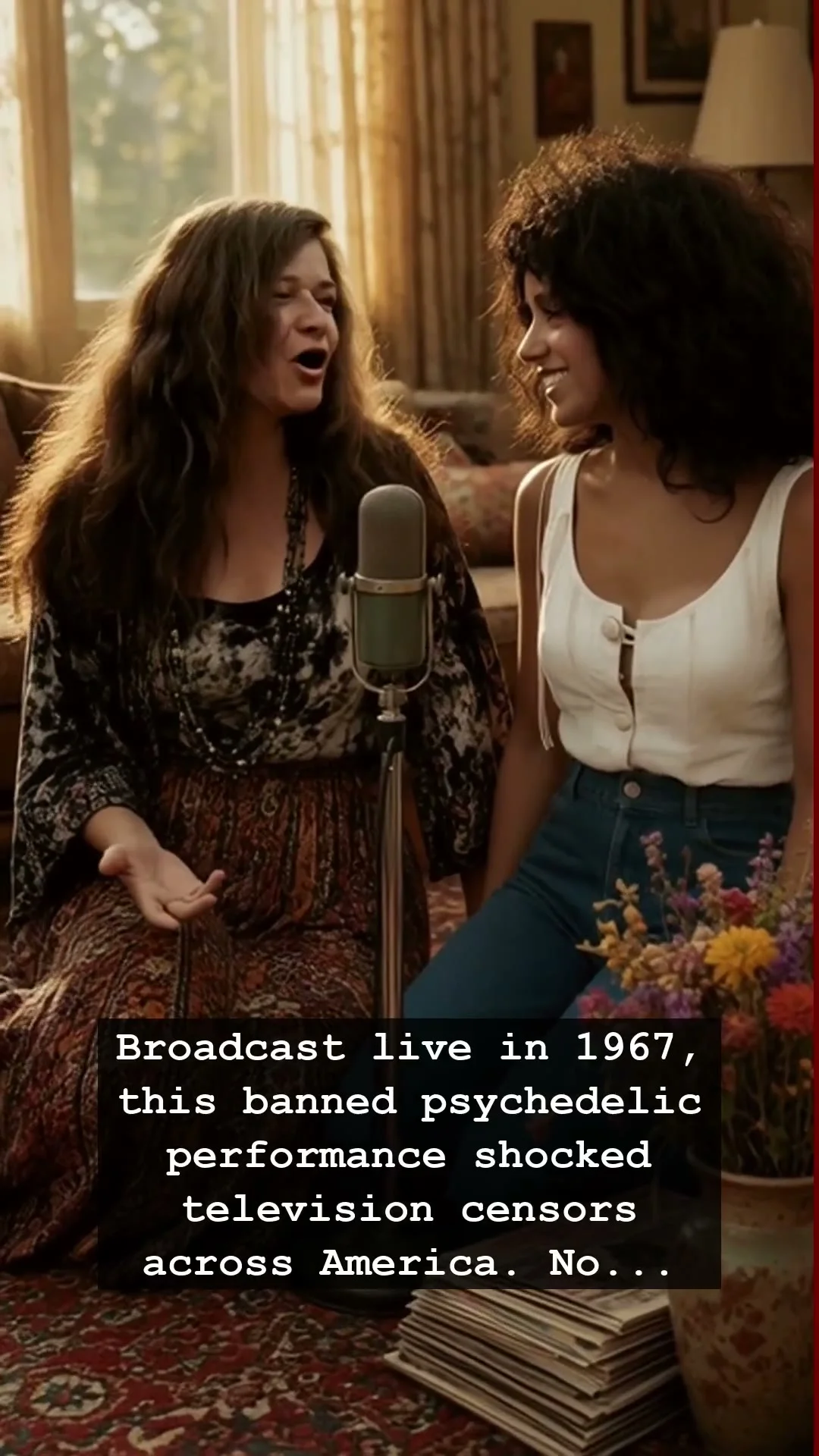
It was 1967, a year defined by the Summer of Love and the swirling haze of a cultural revolution. Across the living rooms of conservative middle-class America, the Smothers Brothers Comedy Hour served as a weekly ritual of laughter and light entertainment. But on one fateful night, the air in those suburban homes grew heavy with tension. Grace Slick, the enigmatic voice of Jefferson Airplane, stood under the stark studio lights. Dressed in full blackface—a choice that remains as controversial and baffling as it was provocative—she was about to deliver a performance of White Rabbit that would leave television censors scrambling and a nation paralyzed in disbelief.
As the final, haunting notes of the song faded into the studio silence, Grace Slick did the unthinkable. She slowly raised a clenched fist into the air. In the climate of the Vietnam War and the rising tide of the Black Power movement, this single, defiant gesture was not just a performance; it was a political earthquake broadcast live into millions of homes. The network executives were reportedly livid, the censors were caught off guard, and for many watching, the boundary between musical entertainment and radical protest had been irrevocably shattered. It was a moment of raw, unvarnished rebellion that defined the psychedelic era.
To understand the gravity of that moment, one must remember the world of 1967. The air was thick with the scent of incense and the sound of electric guitars pulsing through cheap transistor radios. Jefferson Airplane was at the vanguard of the San Francisco sound, turning the Jukebox hits of the time into something darker and more cerebral. Grace Slick, with her commanding vocals and unpredictable stage presence, was the perfect avatar for this shifting reality. She wasn’t just singing; she was conducting a social experiment, daring the audience to look past the surface of the mainstream and stare directly into the eyes of the counterculture.
Behind the scenes, the pressure on stars like Grace Slick was suffocating. The transition from the optimism of the early sixties to the cynical, war-torn reality of the late decade created a vacuum of anxiety that many artists filled with substances and defiance. Grace Slick navigated this landscape with a fearless, often reckless, audacity. Her performance that night was a testament to the era’s volatility, where music was the primary weapon in a fight for the soul of a generation. It wasn’t just about the melody; it was about the power of an image to disrupt the status quo.
Decades later, the echo of that raised fist still resonates. It reminds us of a time when television was the front line of cultural warfare and when a single musical icon could truly change the conversation. Grace Slick remains a polarizing, towering figure of the sixties, a woman who refused to play by the rules of polite society. As we look back on the psychedelic haze of those years, we are reminded that music was never meant to be merely background noise. It was, and always will be, a catalyst for the unexpected, waiting for the next final note to ring out and demand our attention once again.