
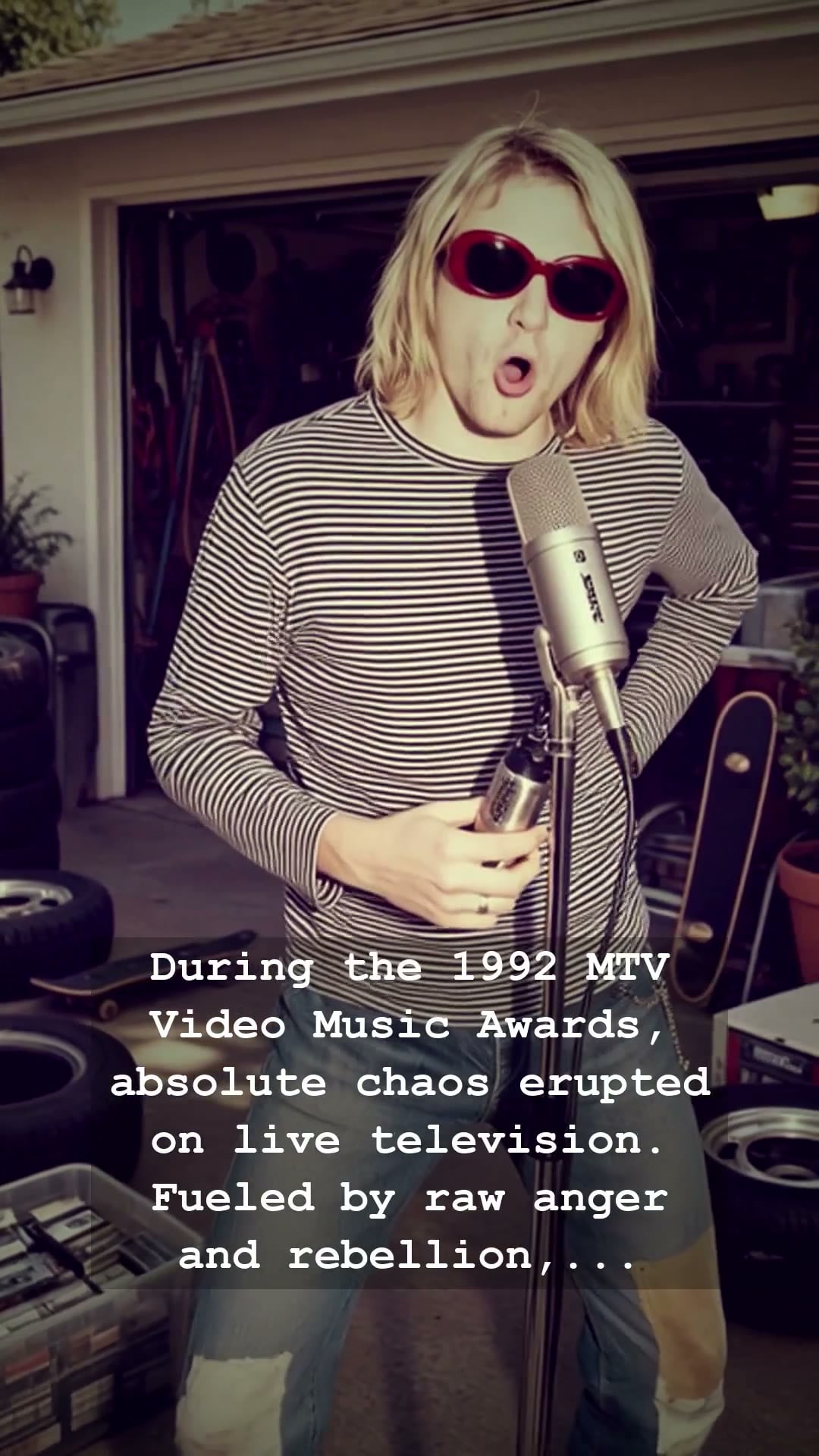
It was August 1992, and the world was watching the MTV Video Music Awards with bated breath. At the time, the VMAs were the undisputed center of the cultural universe, a glittering neon stage where pop stars and rock gods alike vied for relevance. But among the polished performances and carefully choreographed segments, one band arrived with a different agenda entirely. Nirvana, the grunge pioneers from Seattle, weren’t there to play the corporate game. Fueled by a deep-seated disdain for the industry’s vanity and the immense pressure of their sudden, explosive fame, Kurt Cobain and his bandmates turned a live broadcast into a theater of raw, unfiltered rebellion.
The tension was palpable long before they stepped onto the stage. Executives at MTV were terrified, demanding the band play their breakout hit, Smells Like Teen Spirit, while Kurt Cobain famously insisted on performing a new track, Rape Me. A standoff ensued, culminating in a bitter compromise. As they launched into Lithium, the atmosphere shifted from typical stage antics to something bordering on violence. Kurt Cobain was physically writhing, pouring every ounce of his internal anguish into his guitar, his voice raspy and desperate. It was the sound of a generation that felt alienated by the glossy, hyper-produced aesthetic of the early nineties.
Then came the climax. As the performance hit its peak, the band descended into a wall of feedback and controlled destruction. Kurt Cobain began smashing his Fender Mustang against the stage gear, while bassist Krist Novoselic launched his bass high into the air, nearly knocking himself out upon its descent. It wasn’t just a stunt; it was a violent, cathartic rejection of the fame that had suddenly engulfed them. For millions watching at home through the static of their television sets, this moment was a seismic shift. It signaled that the era of pristine, untouchable superstars was ending, replaced by the bruised, authentic, and unapologetic voice of the grunge movement.
The aftermath of that night only fueled the legend of Kurt Cobain. The music industry, caught between fascination and horror, realized they could no longer control the artists they signed. For those of us who lived through the nineties, the image of that splintered guitar remains a defining portrait of an era. It represented the fragile intersection of genius and pain, a snapshot of a man who was desperately trying to stay true to his art while the world tried to package it for mass consumption. The chaos of the 1992 VMAs wasn’t just a breakdown; it was a desperate, defiant cry for identity in a decade that was rapidly losing its soul to commercialization.
Decades later, the legend of Kurt Cobain continues to haunt and inspire. We still look back at that night not because of the broken instruments, but because it was the last time we saw rock and roll feel truly dangerous on such a massive, global scale. It reminds us of a time when music could still shock the status quo to its core. As we listen to those familiar distorted chords today, we are reminded that beneath the myth, there was a human being whose vulnerability became the voice for millions. Perhaps that is why, whenever we hear a Nirvana track, we are instantly transported back to that electrifying moment when everything changed.