
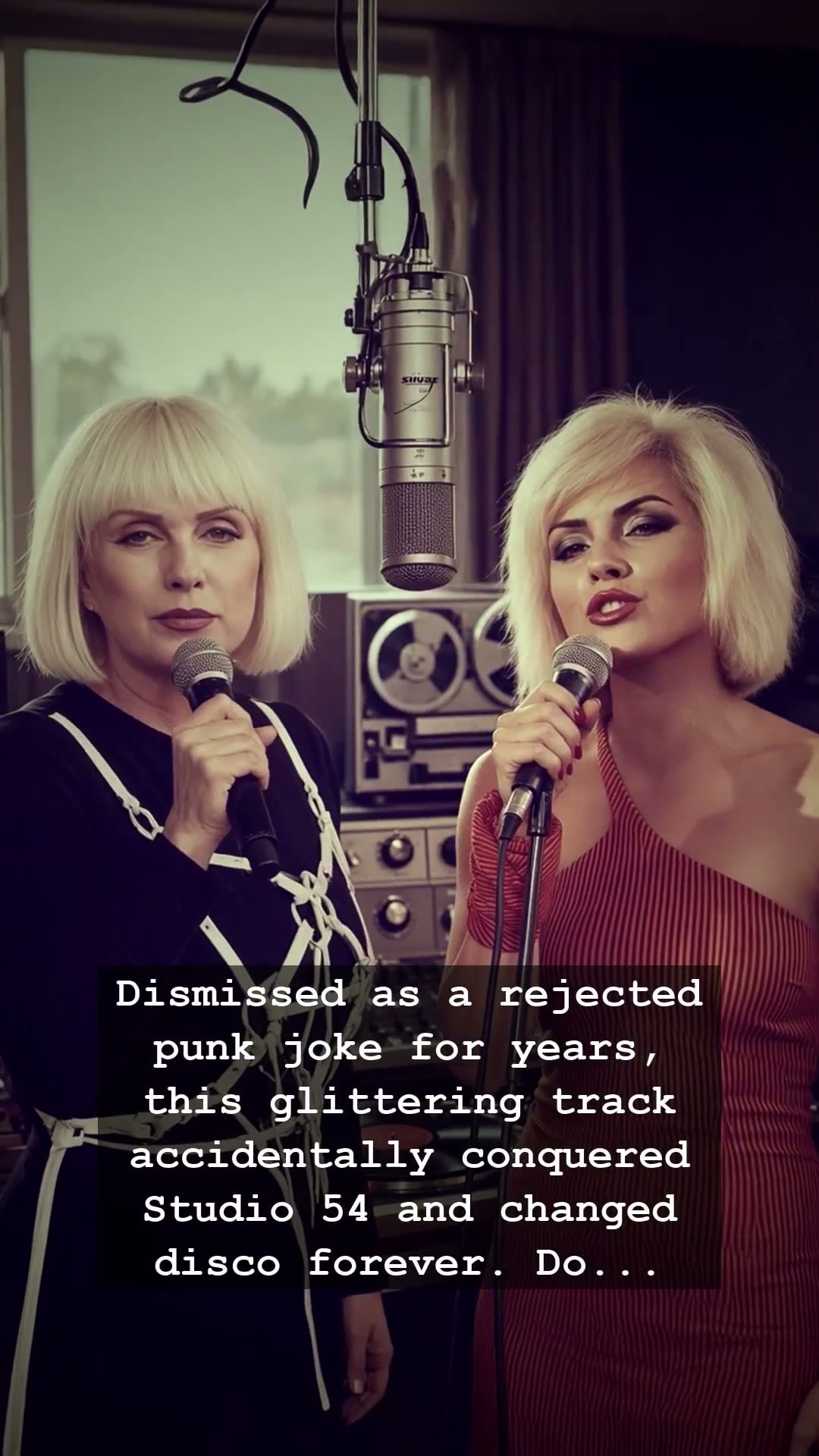
In the late 1970s, the music scene was a violent tug-of-war between the gritty, sweat-drenched walls of CBGB and the pristine, mirror-balled opulence of Studio 54. For the members of Blondie, their brand of downtown New York cool was supposed to stay firmly planted in the punk underground. But destiny had a different rhythm in mind. When Debbie Harry and her bandmates released Heart of Glass, it was initially dismissed by hardcore purists as a sell-out, a rejected joke that betrayed their rock-n-roll roots. Little did they know, this glittering, shimmering accident was about to rewrite the rules of modern music forever.
The genius of Heart of Glass lay in its hypnotic, mechanical pulse—a disco beat that felt strangely cold, yet impossibly alluring. Debbie Harry, the quintessential ice-cool icon, delivered her vocals with a detached, sultry elegance that perfectly encapsulated the disillusionment of the era. Behind the scenes, the recording process was anything but smooth. The band had been tinkering with the track for years, originally under the title The Disco Song, and it was widely mocked by their peers. At the time, disco was seen as the antithesis of the authentic punk rebellion, and by touching it, Blondie was essentially playing with fire.
As the song began to circulate, the transformation was nothing short of miraculous. The very same track that was meant to be a sardonic jab at the disco craze became the undisputed soundtrack of the glitterati. When it echoed through the speakers of the legendary Studio 54, the boundaries between the underground and the mainstream dissolved. The band had successfully bridged two hostile worlds, proving that punk spirit could survive even under the reflection of a spinning mirror ball. It was a moment of pure musical alchemy that caught everyone, including the band themselves, completely off guard.
Beyond the glitz and the chart-topping success, Heart of Glass remains a bittersweet time capsule. It captures a fleeting moment where the raw aggression of the mid-70s met the polished, neon-soaked ambition of the synth-pop dawn. The tragedy of the era was that so many great bands were forced to choose sides, yet Blondie managed to defy the critics and exist in that beautiful, liminal space between chaos and perfection. It remains a testament to the fact that sometimes, the greatest artistic breakthroughs occur when you simply stop worrying about the rules of your own scene.
Today, when you hear those opening synthesizer notes, it is impossible not to be transported back to a night in Manhattan, where the velvet ropes were thick and the future felt limitless. Blondie didn’t just record a hit; they captured the sound of an entire generation finding common ground on the dance floor. Even decades later, the legacy of this unlikely anthem persists as a reminder that the best music is often the kind that surprises us the most. Turn up the volume, let the rhythm take over, and imagine yourself under those neon lights one more time.