
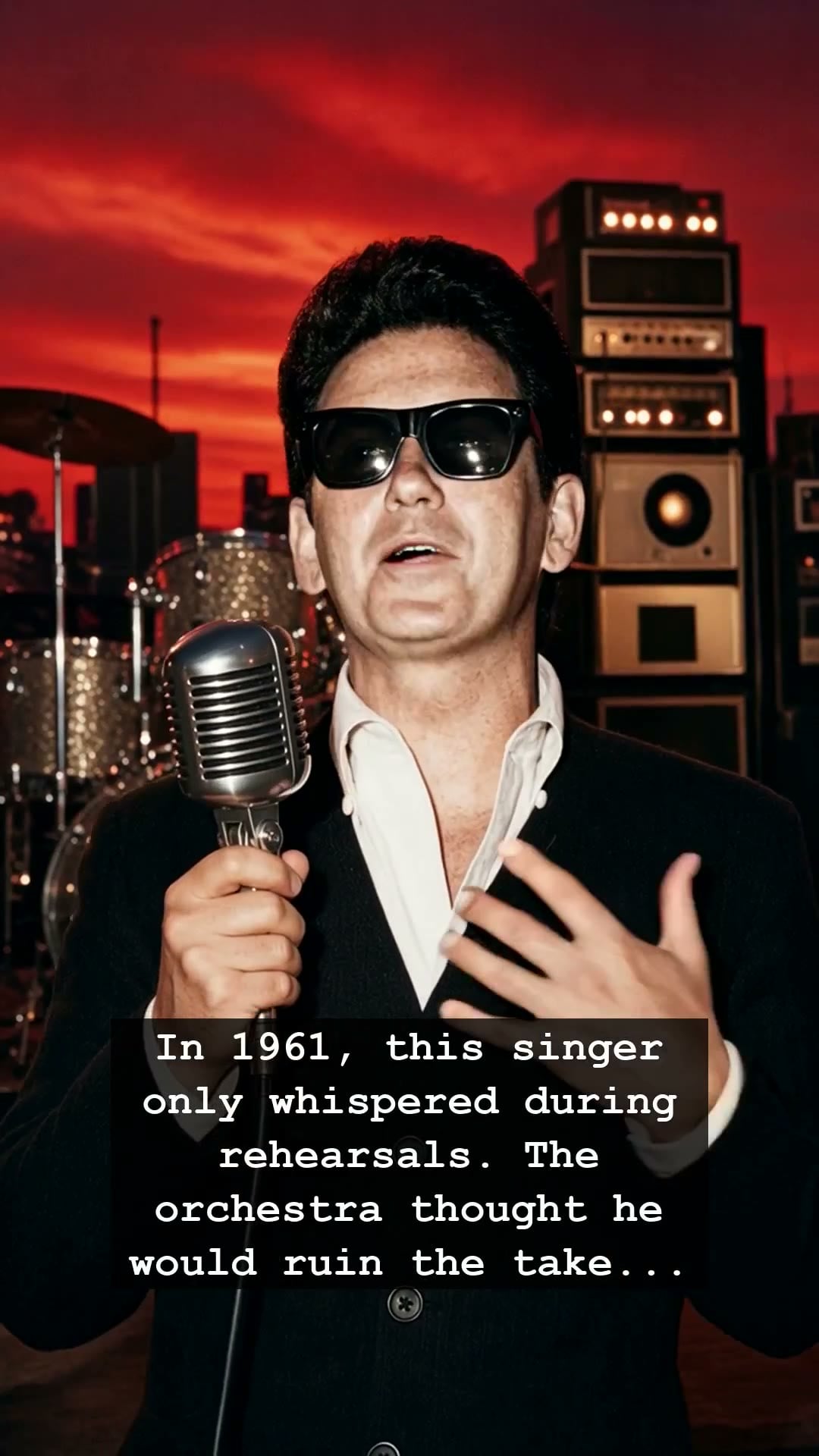
In the cold, clinical atmosphere of a 1961 recording studio, a man stood before a collection of seasoned orchestral musicians, barely making a sound. Roy Orbison, the man behind the dark shades and the haunting baritone, had been whispering his way through every single rehearsal of what would become a generational masterpiece. The tension in the room was palpable. Veteran players exchanged worried glances, bracing for a catastrophic take. They were certain the soft-spoken Texan was about to crash and burn, failing to deliver the power required to carry the song. But as the engineer signaled that the tape was rolling, everything changed in a heartbeat.
When the backing track kicked in, the man who had been whispering moments ago underwent a visceral transformation. Roy Orbison didn’t just sing; he unleashed a soaring, operatic high note that sliced through the sterile air of the studio like a bolt of lightning. It was a moment of pure, unadulterated musical alchemy. The orchestra, which had been preparing for a disaster, stopped playing in their tracks. The room fell into a stunned, breathless silence. It was a one-take wonder that captured the raw, melancholic soul of the early 1960s, turning Roy Orbison into an instant legend whose voice would soon define the era of the jukebox and the transistor radio.
This wasn’t just a recording session; it was the birth of a signature sound that bridged the gap between rock and roll and the grand, sweeping drama of American pop. Roy Orbison was never a traditional front-man. He carried a heavy, mysterious aura, often standing still while others jumped around stage, letting his voice do the heavy lifting of a thousand broken hearts. At a time when the world was shifting toward the vibrant, upbeat sounds of the early sixties, he chose to lean into darkness, loneliness, and longing. His music became the soundtrack for those who felt like outsiders, a stark contrast to the emerging surf-rock frenzy.
Decades later, the echo of that 1961 performance still rings true. Whether it was the influence of his music on later icons or the way his tracks have been immortalized in films and on vintage vinyl, Roy Orbison remains a titan of the mid-century soundscape. His ability to build a song from a whisper to a crescendo served as a blueprint for power ballads, long before the term became a staple of stadium rock. It was a brand of vulnerability that felt dangerous, authentic, and utterly captivating.
We look back at those years with a sense of wonder, remembering a time when talent wasn’t polished by digital autotune but forged in the pressure of a single studio take. The memory of Roy Orbison serves as a reminder that greatness often hides behind a quiet exterior, waiting for the perfect moment to break through. Do you remember the first time you heard that soaring, legendary voice pierce the silence? It is a melody that continues to haunt the hallways of musical history, refusing to fade away.