
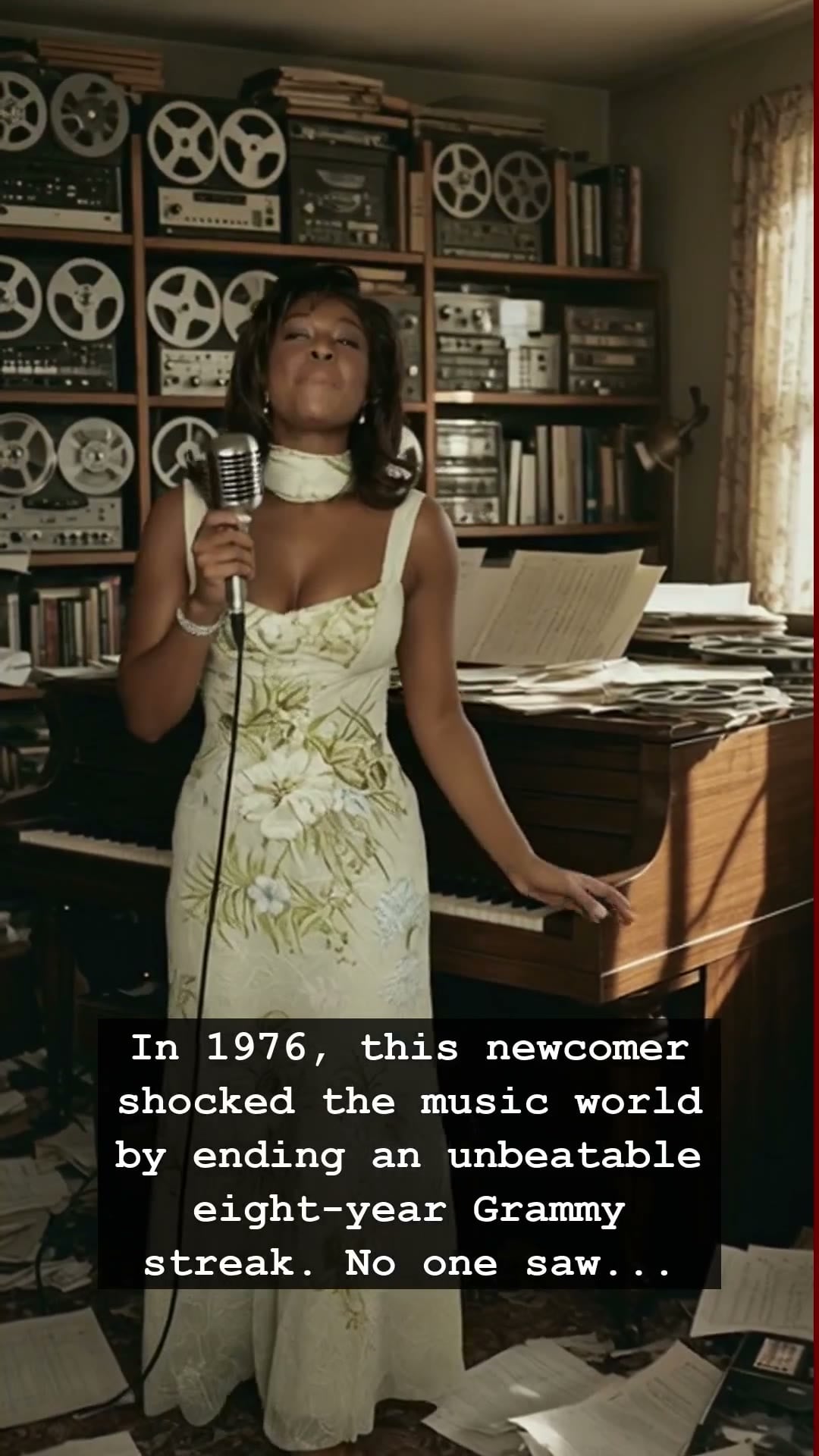
In 1976, the music world held its breath as the Grammy stage waited for an outcome everyone assumed was etched in stone. For eight consecutive years, the throne of Best New Artist and female vocal dominance had been held with an iron grip by a select few, and the industry believed the pattern was unbreakable. But as the envelope opened, a newcomer emerged to deliver the ultimate upset. Natalie Cole did not just walk onto that stage; she shattered an unbeatable streak, sparking a fierce and legendary rivalry that sent shockwaves through the soul music world and forever changed the trajectory of American rhythm and blues.
Natalie Cole was more than just a name; she was the daughter of the legendary Nat King Cole, carrying a legacy that felt both like a crown and a cage. When she burst onto the scene with Inseparable, the airwaves were dominated by the polished sounds of Motown and the fading echoes of the disco revolution brewing in the corners of Studio 54. The established royalty of the genre saw her as an outlier, a newcomer whose sudden success threatened the fragile ecosystem they had carefully curated for nearly a decade. Her victory wasn’t just a win; it was an act of artistic insurgency that pitted the old guard against a fresh, hungry generation of soul singers.
The drama behind the scenes was palpable. Industry insiders whisper of icy encounters and cold shoulders backstage, as Natalie Cole navigated the crushing weight of her father’s shadow and the intense scrutiny of a public that demanded perfection. She was an artist caught between the nostalgia of the jukebox era and the gritty, raw evolution of 1970s soul. Her music carried a sophisticated depth that felt like a bridge between the classic standards and the modern urban experience, yet the pressure to sustain that momentum pushed her into the dark, hidden corridors of fame where the glitz often gives way to isolation and substance abuse.
Yet, the power of Natalie Cole lay in her resilience. She took the friction of those early rivalries and transformed them into a sound that was undeniably her own. When we listen to her early tracks today, we aren’t just hearing a chart-topping hit; we are hearing the sound of a woman asserting her identity against a backdrop of institutional skepticism. She proved that talent, while perhaps inherited, required a relentless, burning fire to survive the harsh light of the music business. Her story remains a vital piece of the American musical tapestry, representing the classic tension between legacy and evolution.
Decades later, the echoes of that 1976 Grammy moment still resonate with anyone who knows the heartbreak and glory of the industry. Natalie Cole stands as a testament to the fact that records are meant to be broken and that the most iconic voices are often forged in the fires of conflict. As we look back through the lens of nostalgia, we find that the music we cherish the most is often defined by the moments that nearly tore it apart. Her journey is a reminder that while fame may be fleeting, a true musical legacy is built on the courage to challenge the status quo and claim one’s own space under the spotlight.