
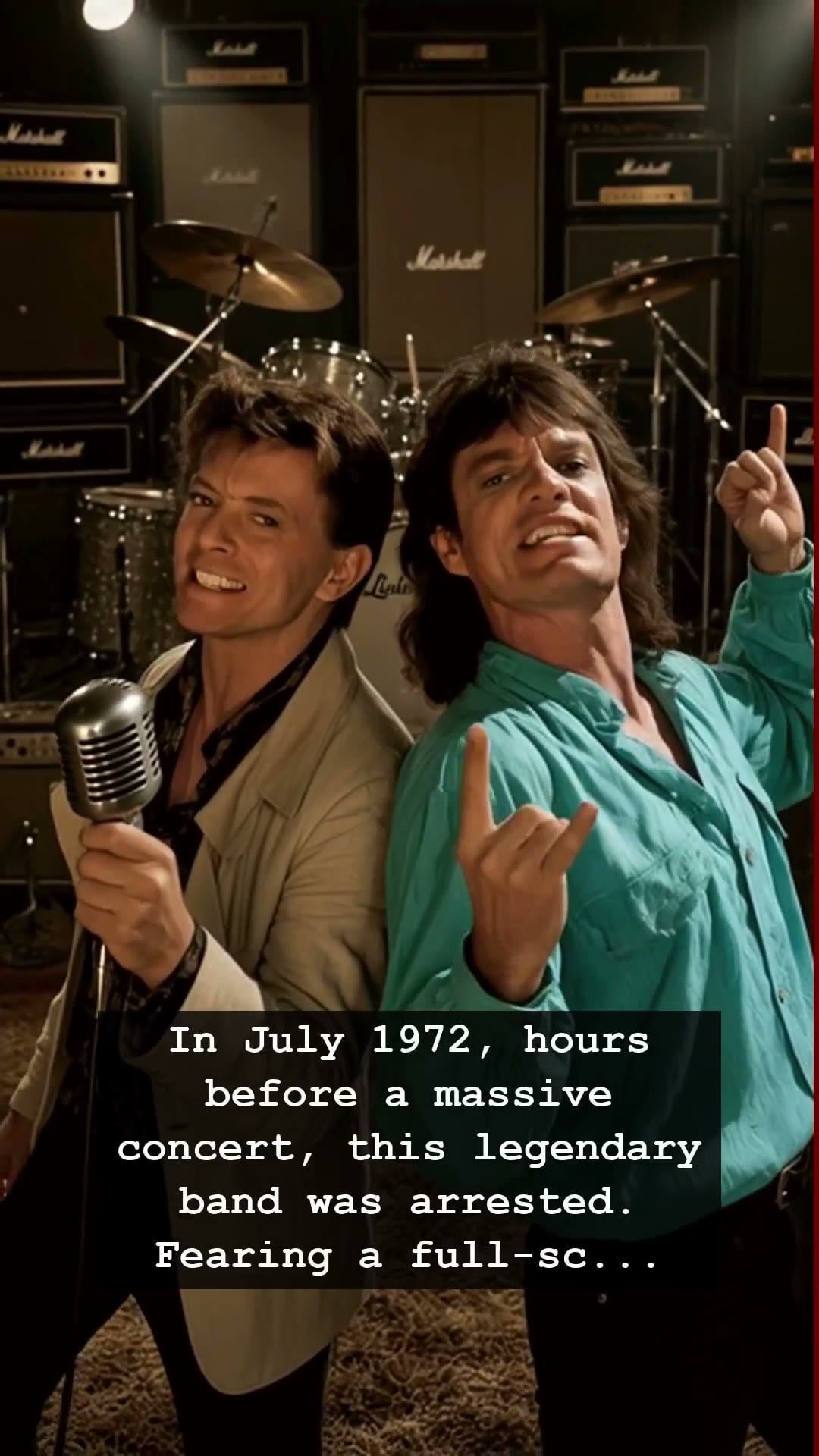
The year was 1972, a time when the air felt thick with the static of rebellion and the smell of cheap hairspray and cigarette smoke. It was the height of the summer tour, a period defined by the grit of the Rolling Stones at their absolute peak. Fans were huddled around Jukeboxes and radios, listening to the raw, untamed energy of Exile on Main St. But in Warwick, Rhode Island, the music nearly stopped before it even started. Just hours before a sold-out show that promised to shake the very foundations of the arena, the Rolling Stones found themselves locked away in a police cell, arrested following a heated altercation with a photographer at the airport.
Imagine the scene: thousands of fans pouring into the venue, unaware that their idols were trading leather jackets for handcuffs. As word of the arrest trickled out, the atmosphere shifted from electric anticipation to a dangerous, volatile frenzy. The city officials realized with a jolt of terror that if the show were canceled, the restless crowd would likely tear the city apart. Fearing a full-scale riot that would echo long after the tour buses left, the mayor of Warwick took an unprecedented step. He personally intervened, working the phones and cutting through the bureaucratic red tape to bail the Rolling Stones out of jail just in time to hit the stage.
This wasn’t just a simple brush with the law; it was a defining moment for the Rolling Stones. During the early seventies, the band lived on the razor’s edge, dancing between global superstardom and complete self-destruction. Mick Jagger, Keith Richards, and the rest of the crew were symbols of a counterculture that refused to play by the rules. The incident in Warwick highlighted the immense, almost frightening power of rock and roll at the time. When the band finally walked onto that stage, the roar from the audience wasn’t just appreciation—it was a visceral release of tension from a generation that felt truly represented by the chaos of these men.
Looking back, the 1972 tour remains a legendary chapter in music history, capturing a raw authenticity that modern productions rarely replicate. It was an era before social media sanitized every public move, leaving us with grainy photographs and the echoes of concert bootlegs as our primary portals to the past. The Rolling Stones were the ultimate outlaws, and their ability to command such intense devotion—and occasional panic—remains a testament to their enduring cultural impact.
Even today, the story of their Rhode Island arrest reminds us of why we fell in love with these legends. It was never just about the music; it was about the drama, the stakes, and the feeling that anything could happen at any given moment. The Stones were not just performers; they were the heartbeat of an untamed generation. Do you remember where you were when the magic of the seventies was in full swing, or perhaps you caught the echoes of this wild era later on? Let the nostalgia wash over you, and keep the records spinning.