
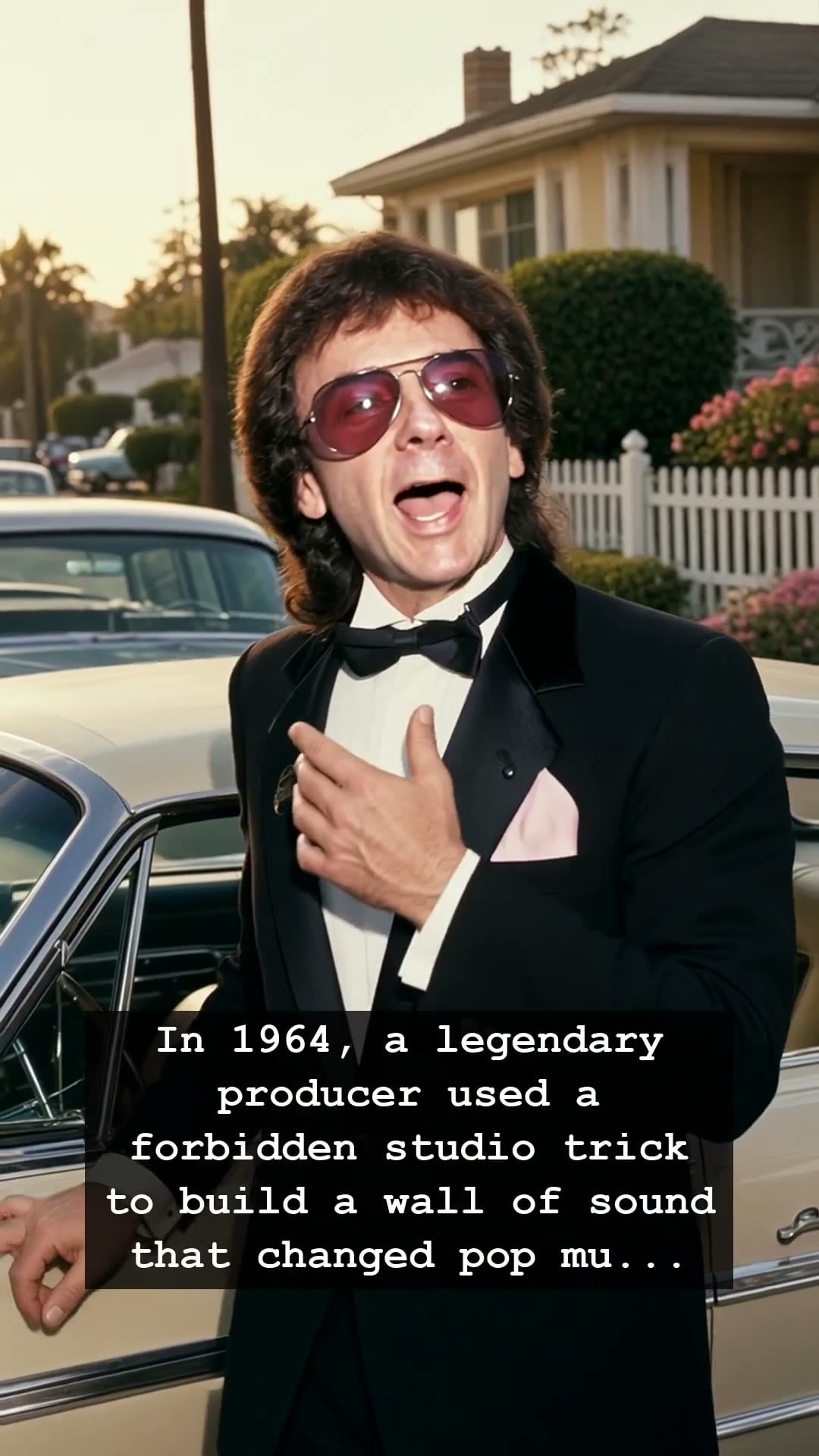
In 1964, a man locked the doors of Gold Star Studios, clutching a secret that would eventually rewrite the DNA of pop music. Inside that sweltering, smoke-filled room in Los Angeles, Phil Spector wasn’t just recording a song; he was constructing a cathedral of noise. While the rest of the world was mesmerized by the simple jingles of the early sixties, Phil Spector was layering instruments until the sound reached a fever pitch of intensity. He called it the Wall of Sound, a dense, orchestral production style that turned every single radio hit into a thunderous, emotional experience. Yet, beneath the shimmering reverb and the golden echoes of the Jukebox era, a darker reality was beginning to fester.
To create this signature sound, Phil Spector employed a technique that terrified his musicians. He would cram dozens of session players—multiple guitars, pianos, and drummers—into a small, cramped room to play the same parts in unison. The air in the studio was thick with tension. If a musician missed a single note, the temperamental producer would unleash a barrage of verbal abuse. It was a pressure cooker of creative genius and psychological torment. Musicians spoke of him as a visionary who could hear the future, but they also feared the erratic hand that steered the ship. It was a time when the myth of the genius producer began to eclipse the talent of the bands themselves.
This sonic revolution arrived just as the teenage dream was shifting. The Wall of Sound became the soundtrack for those who spent their nights huddled around portable radios, listening to The Ronettes or The Crystals. It was a massive, immersive experience that made three-minute tracks feel like epic cinematic triumphs. Phil Spector had mastered the art of making the invisible feel tangible, creating a lush, symphonic landscape that defined the mid-sixties. However, this level of control was intoxicating and, ultimately, destructive. The same perfectionism that birthed such melodic beauty was fueled by a fragile, often dangerous ego that demanded absolute subservience from everyone in his orbit.
As the decade progressed and the industry moved toward the rebellious grit of Woodstock and the eventual rise of the arena rock gods, the influence of Phil Spector remained an inescapable shadow. He moved from the sun-drenched pop hits to collaborations with icons like The Beatles and John Lennon, his heavy production style becoming a signature that demanded attention. Yet, as we look back from the modern era, it is hard to separate the art from the man who eventually spiraled into a life defined by isolation and violence. The Wall of Sound stands as a monument to his technical genius, but it is forever stained by the darkness that eventually swallowed his career.
Today, when you hear a remastered track from that golden era, the clarity is startling, but the weight of the history behind it is even heavier. Phil Spector changed the way we listen to music by proving that production was as important as the melody itself. His legacy is a complex tapestry of innovation and scandal, reminding us that the most brilliant creative minds are often the most fragile. As you put on your records tonight and hear that familiar, thunderous wall rise to meet you, consider the cost of that perfection. Does the music still move you the same way, knowing what happened behind those closed studio doors?