
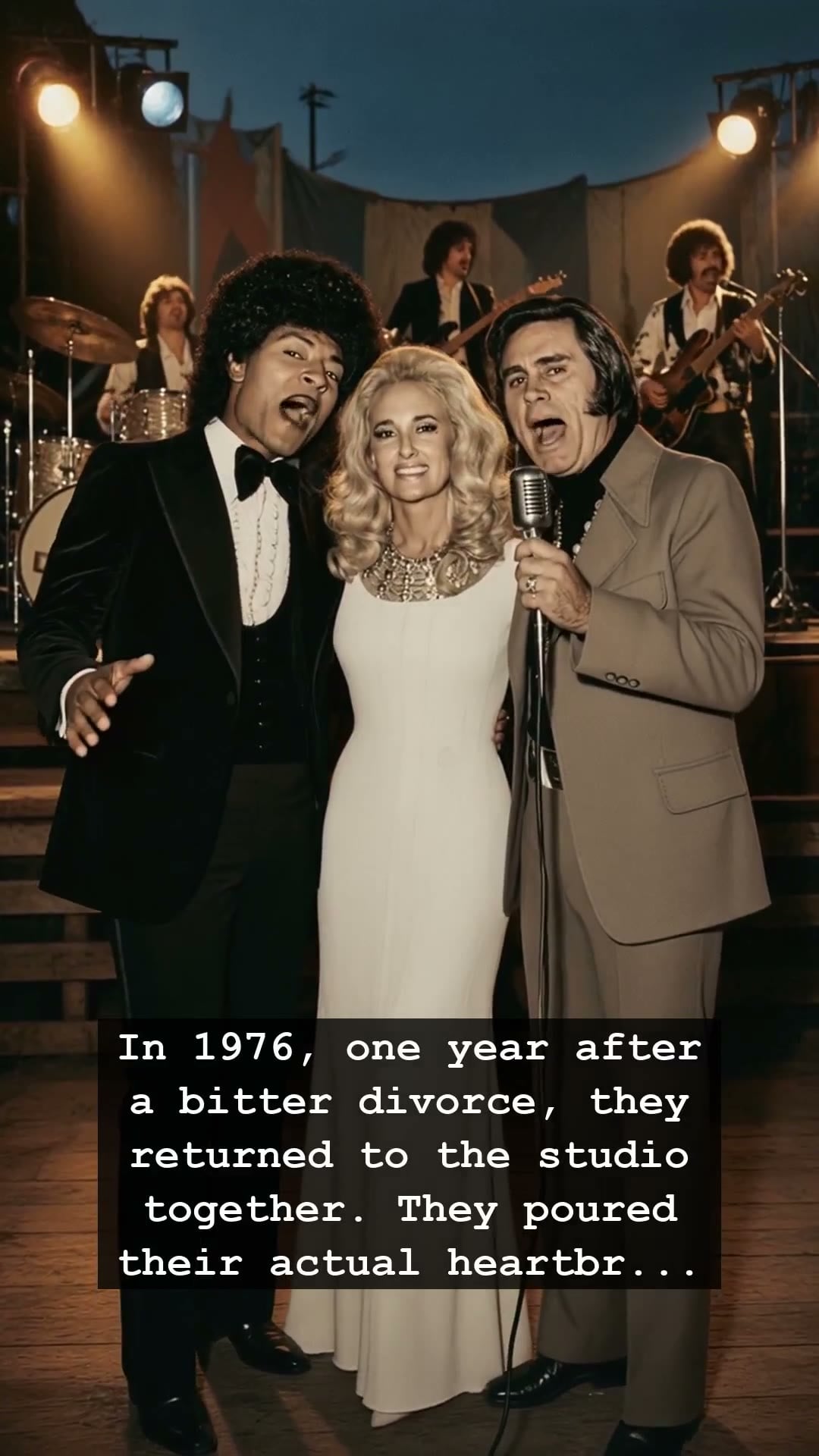
It is often said that the best country songs are born from the deepest wounds. In the dusty landscape of 1970s Nashville, no couple lived this truth quite as painfully as George Jones and Tammy Wynette. Their love story was a whirlwind of glitter and grit, a headline-grabbing romance that felt as inevitable as a classic Jukebox ballad. Yet, by 1975, the fairy tale had collapsed under the weight of addiction and temperament. Most couples would have walked away, keeping their distance to let the dust settle. Instead, these two legends did something that still feels almost masochistic to contemplate today: they returned to the studio together.
Only one year after their bitter divorce, the air in the recording booth was thick with an unspoken, heavy electricity. The year was 1976, and the industry was changing. While the rest of the world was catching the fever of disco and the neon lights of Studio 54 were beckoning, George Jones and Tammy Wynette were trapped in the amber of their own shared history. They didn’t just record a song; they staged a public exorcism of their marriage. When they stepped up to the microphone, they weren’t just two professionals hitting notes. They were two people whose real-life heartbreak was still fresh, raw, and bleeding onto the master tapes.
They poured that agony into songs that would eventually become the bedrock of country music lore. Listen closely to the harmonies from that era, and you can hear the strain, the regret, and the lingering, ghostly residue of their love. It was a time when country stars were the original rock stars, living fast and crashing hard, fueled by the pressures of constant touring and the relentless glare of the spotlight. For George Jones, the struggle was internal, a battle with spirits that often clouded his voice, while Tammy Wynette stood as the resilient queen, masking her own vulnerability with a poise that defined her career. Their reunion sessions were a masterclass in emotional endurance.
What makes this chapter of musical history so magnetic is the sheer authenticity of the pain. Fans could feel it. When the record hit the airwaves, listeners didn’t just hear a melody; they heard a confession. It was a level of vulnerability that rarely exists in modern, polished pop music. They were letting the audience peek behind the curtain of the country music machine, showing that even the biggest legends were just people trying to make sense of a love that had splintered into a million pieces. It was a moment of profound artistic bravery that solidified their status as the king and queen of heartbreak.
Decades later, the legend of George Jones and Tammy Wynette continues to haunt us. Their music remains a testament to the fact that great art often requires a sacrifice of the self. Whether you are listening on a worn-out vinyl or streaming through digital archives, the emotional weight of their work remains undiminished. We continue to return to their catalog not just for the twang of the guitar or the rhythm of the beat, but to experience the human struggle that they so fearlessly documented. After all, isn’t that the reason we reach for these timeless classics—to feel a little less alone in our own memories?