
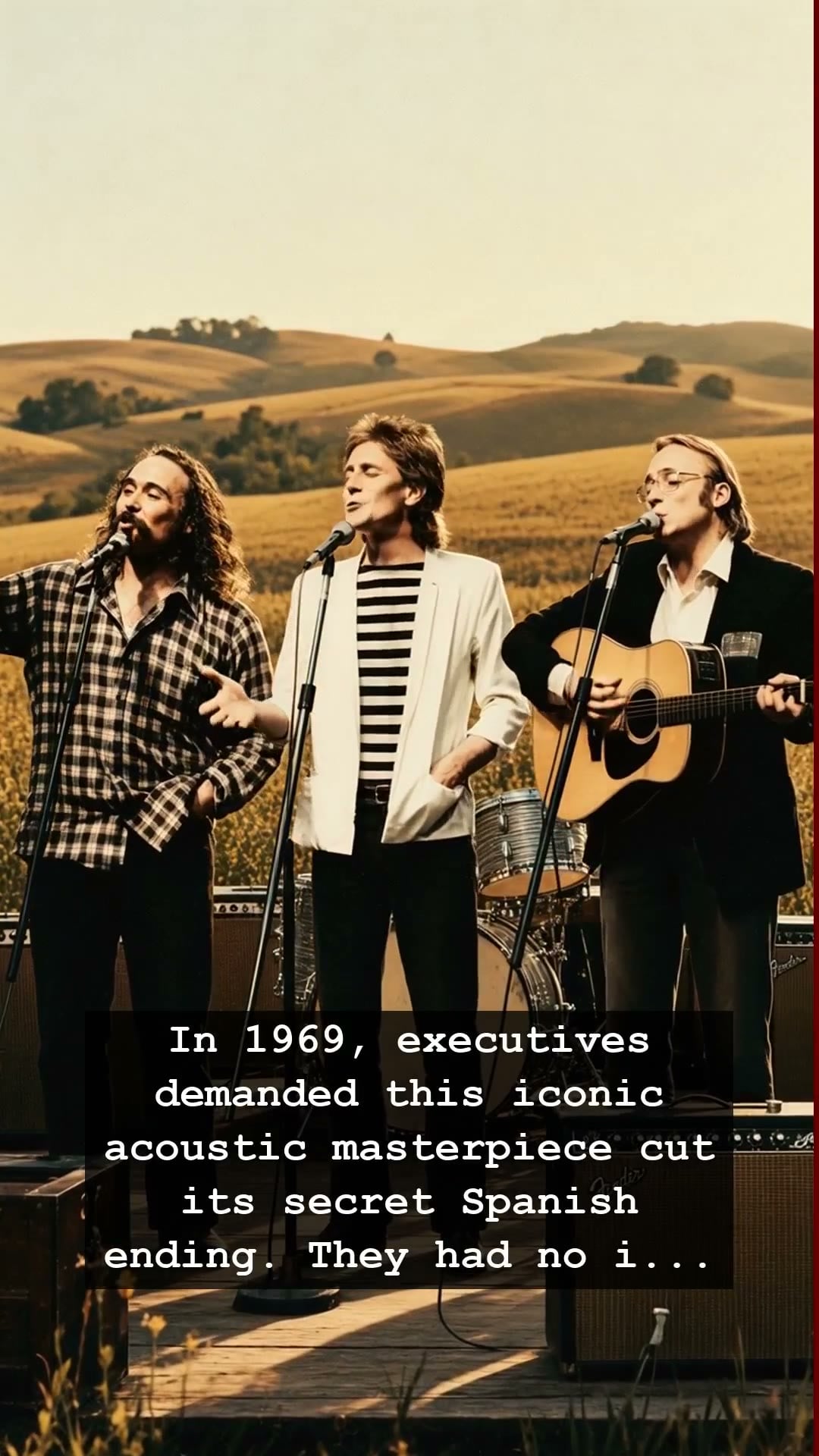
The year was 1969, a period when the airwaves were thick with the scent of rebellion and the promise of a new sonic frontier. Amidst the haze of Woodstock and the fading echoes of the Summer of Love, a folk-rock supergroup emerged that would forever change the landscape of American harmony. Crosby, Stills and Nash were not just musicians; they were alchemists of sound, blending intricate vocal layers with raw, poetic storytelling. Yet, their journey to perfection was almost derailed by the very people tasked with selling their art. Executives at Atlantic Records, ever concerned with radio viability and the shrinking attention spans of the youth, demanded that the band trim the length of their haunting, acoustic-driven masterpiece. Specifically, they targeted the song’s secret Spanish ending, a delicate, melancholic coda that the suits insisted was far too long and entirely unnecessary for a pop hit.
To those executives, the track was a product to be optimized for the burgeoning FM radio format. To David Crosby, Stephen Stills, and Graham Nash, however, that coda was the soul of the composition. It was a bridge between the folk traditions they honored and the experimental, psychedelic atmosphere of the late sixties. The tension in the studio was palpable. It was a classic clash between creative integrity and the commercial machine that drove the music industry. The band stood their ground, sensing that stripping away the ending would not just shorten the song, but hollow out its emotional resonance. They understood, perhaps better than anyone, that their audience was yearning for something deeper, something that transcended the standard three-minute radio loop.
Looking back, it is impossible to imagine the track without that haunting, intricate outro. It serves as a reminder of an era when artists fought tooth and nail to preserve the artistic vision of their albums, long before digital editing made it a common practice. This was the age of the analog warmth of vinyl and the intimacy of the reel-to-reel tape, where every note was physically etched into the master. The refusal to compromise allowed the song to breathe, giving the listener space to sit with the lyrics and the haunting interplay of the acoustic guitars. It became a hallmark of the Crosby, Stills and Nash signature sound.
The legacy of this conflict remains a poignant story of the late sixties. It highlights the often-overlooked struggles that occurred within the sanctuary of the recording studio, far away from the blinding lights of massive concert stages or the fervor of festival crowds. That specific ending became a sacred moment for fans, a piece of musical folklore that underscored the group’s commitment to their craft. Today, when we spin these records, we are not just listening to a hit; we are witnessing an act of defiance that secured a timeless classic for posterity.
As we look back at the golden age of folk-rock, the story of Crosby, Stills and Nash remains a testament to the power of intuition over cold, corporate logic. The music of that generation still resonates because it was forged in the fire of genuine human conflict and artistic passion. It invites us to slow down, to listen to the nuances that the executives once wanted to cut, and to appreciate the artistry that defined a generation. Does the echo of that Spanish guitar still stir something in your soul today?