
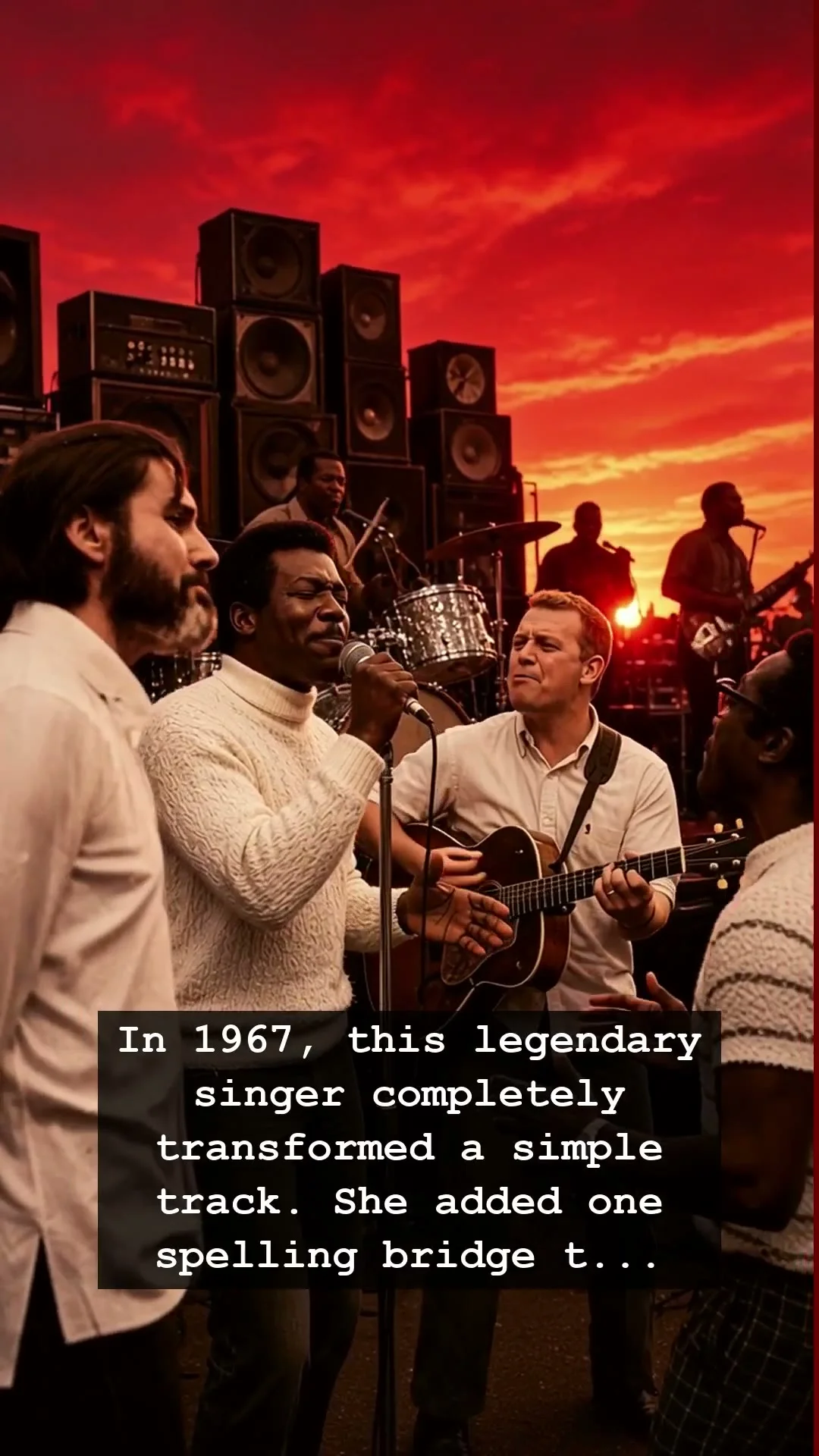
In 1967, the airwaves were crowded with the polished, manufactured sounds of the era, but one voice was about to shatter the mold. Aretha Franklin was not just recording a song; she was crafting a revolution. The track was Respect, originally penned and performed by Otis Redding as a plea from a man to his woman. But when Aretha stepped into the studio, she saw something else entirely. She took that modest, bluesy melody and transformed it into a global roar of empowerment that would define a generation. It was not just a cover; it was a total reclamation of space, voice, and dignity.
Most listeners know the feeling of the needle dropping on the vinyl, the crackle of anticipation, and then that iconic, brassy opening. But the true genius lay in the bridge. Aretha Franklin insisted on a specific addition, a moment of rhythmic precision that changed musical history forever: the spelling out of R-E-S-P-E-C-T. This was not merely a lyrical choice; it was a declarative act. By breaking the word into its individual letters, she turned a simple request into a demanding ultimatum. In the midst of the Civil Rights movement, her voice became the anthem for women everywhere who were tired of being unheard. It was a demand for the bare minimum that felt like a seismic shift in culture.
Behind the scenes, the atmosphere in the studio was electric. Aretha Franklin was working with legendary producers and backing vocalists, including her own sisters, to weave a tapestry of sound that felt both gritty and sophisticated. While many artists of the 1960s were dancing to the upbeat pulse of Motown, Aretha brought a deep, gospel-infused soul that reached into the bones of the listener. She knew that the power of music lay in its ability to mirror the human struggle. She wasn’t just singing; she was testifying to the world about what it meant to be a Black woman in America, demanding a seat at a table that hadn’t been built for her.
Even decades later, hearing that song transports us back to a time of jukeboxes, vinyl records, and profound social change. The legacy of Aretha Franklin goes far beyond this single hit. She navigated the treacherous waters of fame, industry expectations, and personal heartbreak, yet she never lost the signature fire that made her the Queen of Soul. Her influence is etched into the DNA of every modern pop and R&B vocalist who tries to capture that same lightning in a bottle.
We often look back at the 1960s with a sense of wonder at how much the landscape of sound shifted in such a short time. Aretha taught us that music is not just entertainment; it is a vital tool for survival and identity. As the final notes of that iconic track fade away, we are reminded that true art has a shelf life that outlasts the person who created it. Next time you hear those letters spelled out, remember the woman who dared to demand it all, one letter at a time.