
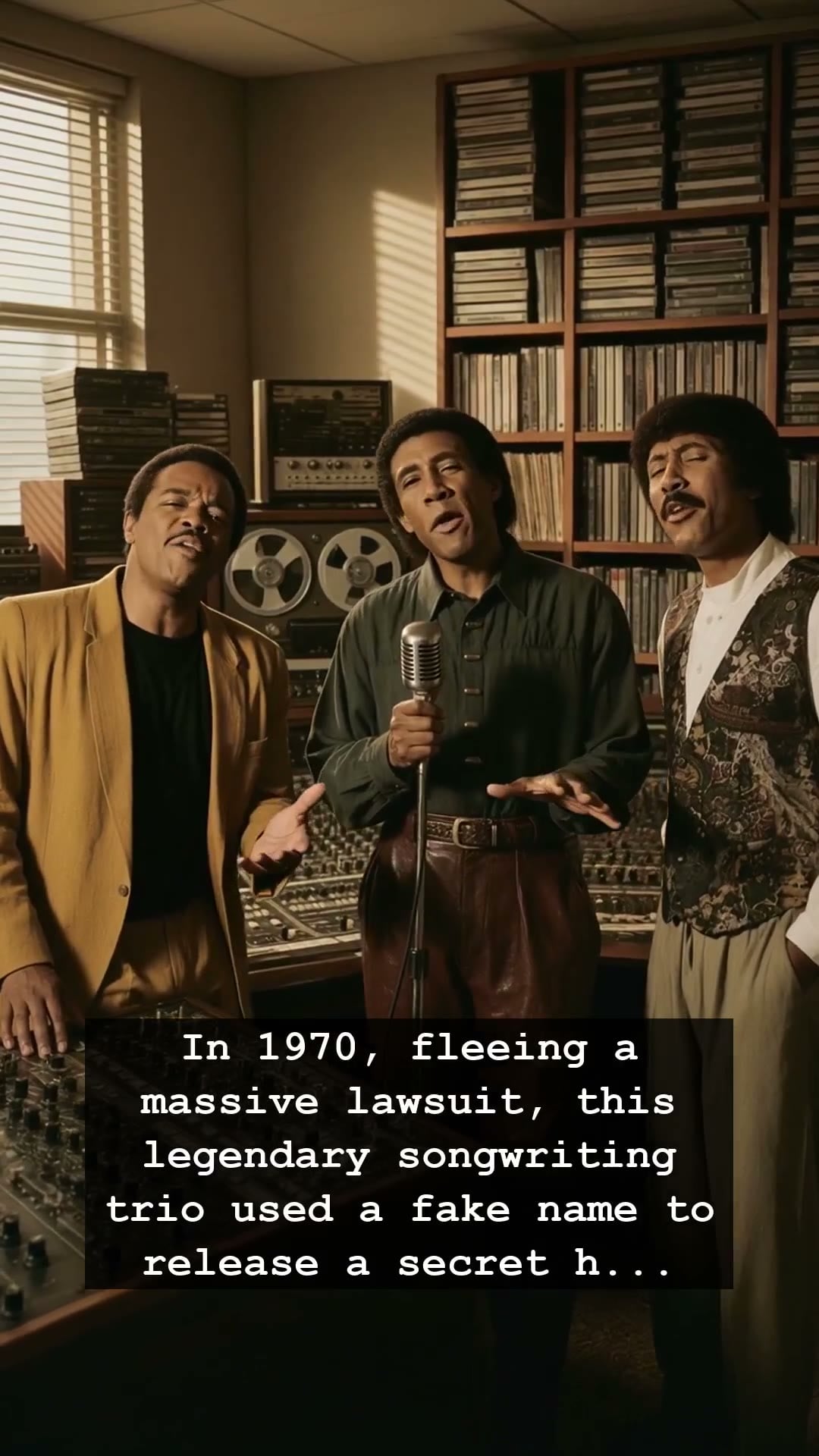
Imagine the year is 1970. The air is thick with the scent of vinyl and the shifting tides of the music industry. You are standing in the middle of a high-stakes legal nightmare, trapped by the iron grip of Motown’s contracts. For the brilliant songwriting trio Holland-Dozier-Holland, the architects behind the Detroit sound, the situation was nothing short of a creative prison. They had already changed the world with their hits, but now they were fleeing a crippling lawsuit that threatened to drain their bank accounts and stifle their very souls. To keep their artistic fire burning, they did the unthinkable: they retreated into the shadows, adopting a clandestine identity to slip back onto the airwaves undetected.
This secret operation culminated in the birth of the Chairmen of the Board. While the music industry was busy searching for the hit-makers of the past, these legends were hiding in plain sight, dropping defiant soul anthems that caught fire on the charts. Their signature track, Give Me Just a Little More Time, hit the speakers of juke-boxes across America with a polished, infectious groove that nobody dared attribute to the outcasts of Motown. It was a clever, bold trick that outsmarted the biggest executives in the business. For a brief moment, the Chairmen of the Board operated in a vacuum of mystery, their identities shielded by layers of legal smokescreens and pure musical genius.
This era was defined by the transition from the golden age of Motown to the grittier, experimental funk and soul of the early seventies. Fans were glued to their transistor radios, unaware that the smooth vocals and tight production they were swaying to were actually the product of a massive underground rebellion. The Chairmen of the Board represented the resilience of artists who refused to let legal red tape dictate their output. It was a masterclass in survival, where the thrill of the chase was just as intense as the rhythm of the music itself. The tension between the polish of their songwriting and the chaos of their private lives gave their music a frantic, desperate energy that resonated with the restless youth of the era.
Looking back, the story of the Chairmen of the Board serves as a vivid reminder of a time when the industry was a wild west of lawsuits and creative theft. It was an era before the digital age sanitized the narrative, back when secrets could still be kept in the back rooms of recording studios. That defiant spirit, captured in those early records, still echoes in the halls of modern soul music. We listen to these tracks today not just for the melody, but for the story of victory against the odds that lies hidden beneath the surface.
There is something profoundly human about the need to create even when the walls are closing in. The Chairmen of the Board proved that if you have the talent, no contract or court order can truly silence your voice. They walked the tightrope of celebrity and anonymity, turning their legal plight into the fuel for one of the most intriguing chapters in soul music history. Next time you drop the needle on an old record, remember that some of the best art ever made was born out of the shadows, meant to be heard long after the legal battles had finally faded away.