
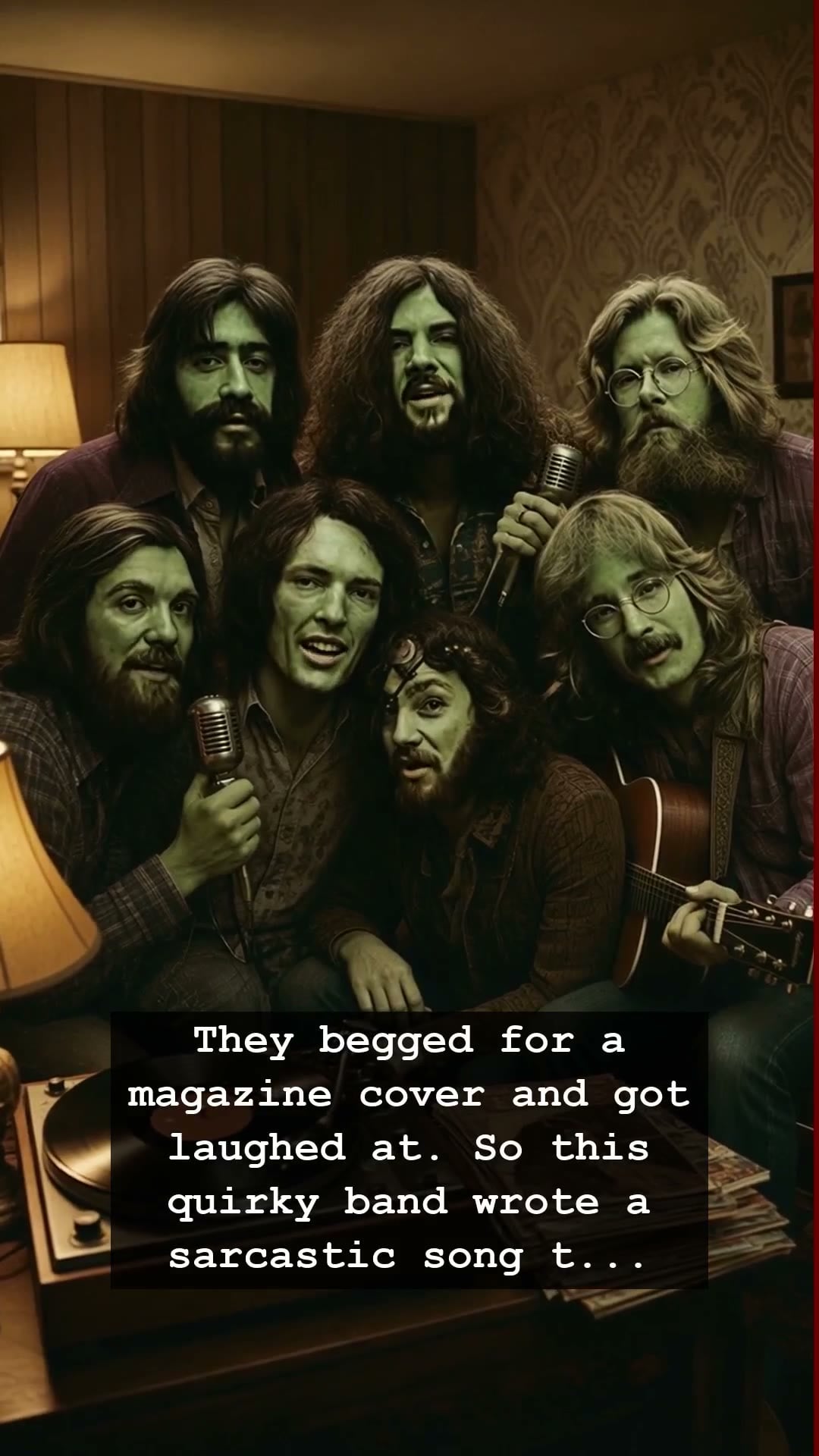
In the golden age of the 1970s, before the polished machinery of modern digital marketing took over, the path to superstardom was paved with grit, luck, and occasionally, a healthy dose of pure, unadulterated spite. For Dr. Hook and the Medicine Show, that path began in a dimly lit office where they were met with nothing but condescending laughter. While icons of the era were gracing the glossy covers of Rolling Stone, this band of misfits was told they simply did not fit the aesthetic. They were too unpolished, too quirky, and too raw for the refined tastes of the music press. But rejection is often the most potent fuel for genius, and what happened next remains one of the most brilliant masterstrokes in rock and roll history.
Fueled by the sting of being ignored, the band decided to lean into the mockery. They didn’t retreat into the shadows; instead, they retreated into the studio to craft a biting, sarcastic anthem titled The Cover of Rolling Stone. It was a bold move that bordered on the absurd—a song essentially demanding the very thing that had been denied to them. With Shel Silverstein’s cynical lyrical wit and the band’s signature charm, the track became an overnight sensation. It captured the zeitgeist of the era, resonating with every listener who felt like an outsider looking in at the glamorous, distant world of rock stardom.
As the song climbed the charts, the irony became impossible to ignore. Radio stations across America blasted the tune, and the very publication that had once laughed at Dr. Hook and the Medicine Show found itself in a corner. The public demand was deafening, and in March 1973, the band achieved the impossible. They appeared on the front page of the magazine that had originally rejected them, though typically for the time, they were featured as a caricature—a badge of honor they wore with immense pride. It was a moment of peak cultural tension, proving that sometimes, biting the hand that feeds you is the only way to get a seat at the table.
Looking back, the story of Dr. Hook and the Medicine Show is a testament to the rebellious spirit of the 70s. This was a time when Jukeboxes reigned supreme and music was the primary currency of cultural rebellion. The band embodied the transition from the psychedelic experimentation of the late 60s to the more cynical, commercially savvy landscape of the mid-70s. Their success was not just about the melody; it was about the raw, human desire to be seen and validated in an industry that constantly shifted its goalposts.
Today, the legacy of Dr. Hook and the Medicine Show serves as a reminder of a bygone era when artists had to fight tooth and nail for visibility. Their triumph remains a legendary piece of music lore, proving that with enough talent and a sharp sense of humor, you can turn a punchline into a permanent place in history. As you spin their records today, remember that every note carries the echo of a band that refused to take no for an answer, changing the face of music journalism forever.